
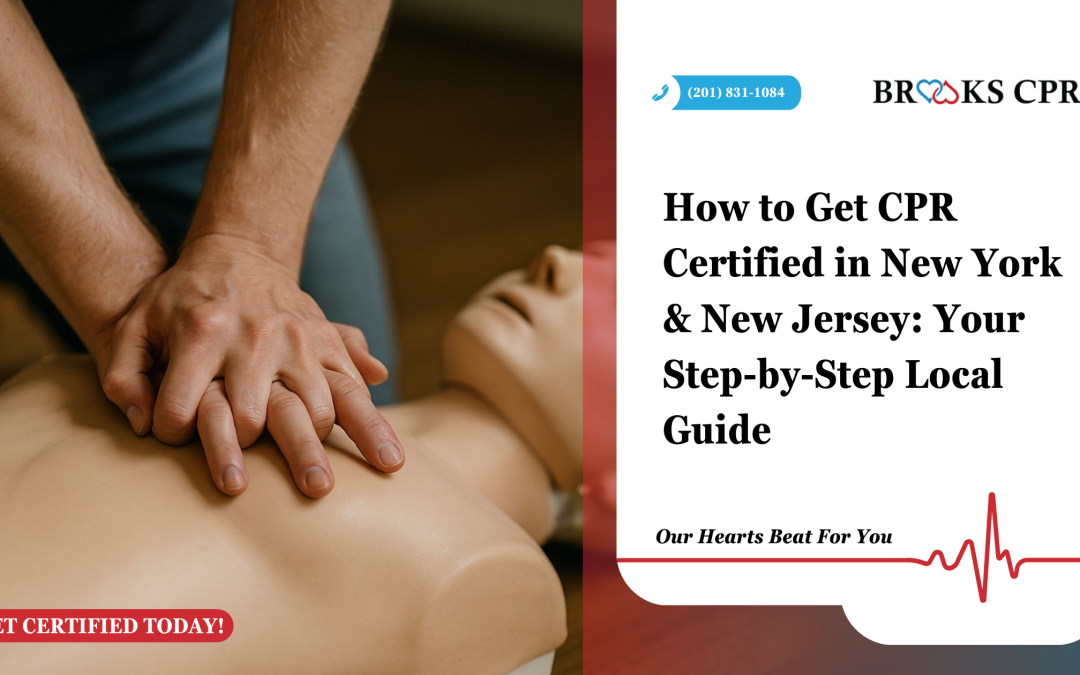
Every neighborhood needs people who know what to do in an emergency.
Maybe that person is you.
Getting CPR certification isn’t just about personal preparedness—it’s about becoming someone your community can count on.
Here in New York and New Jersey, we look out for each other, and CPR training is one of the most meaningful ways to do that.
Whether you’re motivated by your role as a parent, your work with children or seniors, or simply wanting to be a helpful neighbor, this guide will help you navigate the local CPR certification landscape.
You’ll discover training options that respect your time, fit your budget, and give you the confidence to act when someone needs you most.
Choose the Right CPR Course for Your Needs
Not all CPR training is created equal, and finding the right course depends on your specific situation and responsibilities.
Whether you’re a new parent wanting to protect your family or a healthcare professional meeting certification requirements, understanding your options helps you make the best choice for your needs.
Understanding Your Course Options
➡️ Adult CPR forms the foundation of most certification programs and focuses on techniques for helping adults and children over eight years old. This course covers chest compressions, rescue breathing, and recognizing the signs of cardiac arrest. Most people start here because these skills apply to the majority of emergency situations they’re likely to encounter.
➡️ Pediatric CPR addresses the unique needs of infants and young children, whose smaller bodies require different techniques and considerations. The compression depth, hand placement, and breathing methods all differ from adult CPR. Parents, grandparents, babysitters, and childcare providers often find this training invaluable, though many choose to learn both adult and pediatric techniques together.
➡️ Healthcare Provider BLS (Basic Life Support) goes beyond basic CPR to include advanced techniques like two-person CPR, bag-mask ventilation, and team-based resuscitation efforts. This comprehensive course meets the requirements for healthcare professionals and includes scenarios that mirror real medical emergencies.
➡️ AED and First Aid add-ons complement CPR training by teaching you how to use automated external defibrillators and handle common medical emergencies like severe bleeding, choking, and allergic reactions. These skills often prove just as valuable as CPR itself.
Matching Courses to Your Role
Parents and family members typically benefit most from combined adult and pediatric CPR courses, often paired with first aid training.
This combination prepares you for the emergencies most likely to happen at home, from choking incidents to playground injuries.
Teachers, coaches, and youth program leaders usually need pediatric CPR along with first aid certification, as many schools and organizations require both.
Some positions also mandate AED training, especially for those supervising sports activities or large groups of children.
Healthcare workers, including EMTs, nurses, home health aides, and medical assistants, need Healthcare Provider BLS certification.
This level of training meets professional licensing requirements and provides the advanced skills expected in medical settings.
Workplace safety coordinators and business owners often choose adult CPR with AED training, focusing on the emergencies most common in office environments.
Some industries have specific requirements, so checking with your employer or professional organization helps determine exactly what you need.
Making the Right Choice
We offer a range of classes tailored to the needs of NY & NJ residents, whether you’re a parent, a professional, or just want to be prepared.
The key is thinking about the people you’re most likely to help and the environments where you spend your time.
A daycare worker needs different skills than a construction supervisor, and a grandmother wants different training than a hospital technician.
Consider starting with the basics and adding specialized training as your needs change.
Many people begin with adult CPR and first aid, then add pediatric training when they become parents or AED certification when they take on workplace safety responsibilities.
The most important step is simply getting started—any CPR training is better than none.
Look for Accredited CPR Training in NY & NJ
Finding quality CPR training shouldn’t add stress to your already busy schedule, but knowing where to look and what to expect can make the process much smoother.
Understanding your options helps you choose the format that works best for your learning style, schedule, and certification requirements.
In-Person, Hybrid, and Online Options
➡️ In-person training provides the most hands-on experience, with instructors guiding you through practice scenarios using mannequins and equipment. You’ll get immediate feedback on your technique, ask questions in real-time, and practice with other students. This traditional approach works well for people who learn best through direct interaction and want the confidence that comes from extensive hands-on practice.
➡️ Hybrid or blended learning combines online coursework with in-person skills sessions. You complete the academic portion at your own pace online, then attend a shorter in-person session to demonstrate your practical skills. This option appeals to busy professionals who want flexibility but still need hands-on verification of their abilities.
➡️ Online-only courses offer maximum convenience and often cost less than other formats. However, there’s an important caveat for New York and New Jersey residents: most employers, licensing boards, and professional organizations require hands-on skills assessment for official certification. While online courses provide valuable knowledge, they typically don’t meet the practical requirements for workplace or professional certification.
Meeting State Requirements
Both New York and New Jersey generally require hands-on skills demonstration for CPR certifications that satisfy professional licensing, employment, or volunteer requirements.
This means you’ll need to show an instructor that you can perform proper chest compressions, rescue breathing, and other techniques on training equipment.
Key requirements to remember:
- Most professional certifications need hands-on skills assessment
- Online-only courses typically don’t meet workplace certification standards
- Always verify specific requirements with your employer or licensing board
- Some positions accept online learning with in-person skills verification
Convenient Locations Throughout the Region
At Brooks CPR NY NJ, we offer flexible scheduling and convenient locations so you can find a class that fits your busy life.
Our training centers serve communities throughout both states, making it easier to find a location that works with your schedule and travel preferences.
Our locations include:
- Hackensack – Central location for Bergen County and surrounding areas
- Newark – Convenient for Essex County and northern New Jersey communities
- Staten Island – Serving Staten Island and nearby New York areas
Each location maintains the same high standards for instruction and equipment, so you can expect consistent, quality training regardless of which center you choose.
Many students appreciate having options, especially when work schedules or family commitments make certain locations more convenient at different times.
Whether you prefer weekend classes, evening sessions, or weekday training, having multiple locations means you’re more likely to find a time slot that works for your schedule.
The key is finding accredited training that meets your specific needs while fitting into your real-world constraints.
What to Look for in a CPR Training Provider
Choosing the right CPR training provider can feel overwhelming when you’re faced with dozens of options online and in your community.
The quality of your training directly impacts your confidence and ability to help others during emergencies, so taking time to evaluate your options pays off in the long run.
Accreditation That Matters
Look for providers accredited by recognized organizations like the American Heart Association (AHA) or the American Red Cross.
These accrediting bodies maintain strict standards for curriculum, instructor qualifications, and training materials.
When you complete courses through accredited providers, you receive certification cards that employers, licensing boards, and volunteer organizations widely accept.
Some providers offer their own “certifications” that look official but aren’t recognized by employers or professional organizations.
Before enrolling, verify that the provider’s accreditation meets your specific needs, especially if you need the certification for work or professional licensing.
Instructor Quality and Current Curriculum
The best training providers employ instructors with real-world emergency response experience, not just teaching credentials.
Look for instructors who work or have worked as EMTs, paramedics, nurses, or other healthcare professionals.
Their practical experience helps them share realistic scenarios and answer questions that go beyond textbook knowledge.
Up-to-date curriculum matters too, as CPR guidelines change based on new research and best practices.
Providers should regularly update their training materials and ensure instructors stay current with the latest techniques and protocols.
Local Reputation and Student Feedback
Reviews and testimonials from local students provide valuable insights into the training experience.
Look for consistent praise about:
- Clear, engaging instruction that makes complex topics understandable
- Hands-on practice opportunities with proper equipment
- Instructors who create comfortable learning environments
- Responsive customer service and flexible scheduling
- Students feeling confident and prepared after completing courses
Pay attention to recent reviews, as training quality can change over time with new instructors or updated policies.
Experience You Can Trust
Our instructors are certified professionals with years of real-world experience, and we’re proud of our 5-star ratings from students across NY & NJ.
When you’re looking for CPR training, don’t just focus on convenience or price—prioritize providers who combine proper accreditation with experienced instruction and proven student satisfaction.
The right provider will make you feel confident in your abilities while ensuring your certification meets all necessary requirements.
Take time to research your options, read reviews, and ask questions about instructor backgrounds and accreditation before making your decision.
Understanding Certification Requirements in New York & New Jersey
Navigating certification requirements can feel confusing when different organizations have varying standards and renewal timelines.
Understanding what’s expected upfront helps you plan ahead and ensures your certification remains valid when you need it most.
How Long Your Certification Lasts
Most CPR certifications remain valid for two years from the date of completion, though some specialized programs may have different timelines.
Healthcare Provider BLS certifications typically follow the two-year standard, while some workplace-specific training might require annual renewal.
Your certification card will clearly display the expiration date, so you’ll know exactly when renewal is due.
The validity period starts from your completion date, not when you receive your card, so don’t worry if there’s a delay in processing.
However, some employers or licensing boards have specific requirements about certification timing, so check whether you need to complete training before starting a position or if you have a grace period.
Renewal and Recertification Options
When your certification approaches expiration, you have several renewal options depending on your provider and local requirements.
Many people choose recertification courses, which are typically shorter than initial training and focus on updates to guidelines and refresher practice.
Renewal options commonly include:
- Full recertification courses with complete skills demonstration
- Refresher courses for previously certified individuals
- Online renewal with in-person skills verification
- Challenge testing for experienced healthcare providers
Some providers offer early renewal if your certification expires within a few months, allowing you to renew before the expiration date while extending your new certification for the full validity period.
State-Specific Rules to Remember
Both New York and New Jersey maintain specific requirements that go beyond national standards.
Most professional positions require hands-on skills demonstration, meaning online-only certifications typically don’t satisfy workplace or licensing requirements.
Even if you complete coursework online, you’ll usually need to demonstrate practical skills to an instructor.
Healthcare professionals should verify requirements with their licensing boards, as some specialties have additional continuing education requirements beyond basic CPR certification.
Teachers and childcare providers often need pediatric CPR specifically, while some positions require first aid certification alongside CPR training.
Different industries within each state may have varying standards, so checking with your employer or professional organization ensures you get the right type of certification from the start.
Staying Current Made Simple
We guide you through every step, from initial certification to easy renewal reminders.
Keeping track of expiration dates and renewal requirements doesn’t have to be complicated when you work with providers who understand local standards and help you stay on top of your certification needs.
The key is planning ahead rather than waiting until the last minute.
Many people mark their calendar six months before expiration to start researching renewal options, ensuring they have plenty of time to schedule training that fits their schedule and meets their specific requirements.
You’re Ready to Make a Difference
The fact that you’ve read this far tells us something important about you—you’re someone who cares about being prepared and helping others.
That’s exactly the kind of person who makes a real difference during emergencies.
Getting CPR certified isn’t just about learning techniques; it’s about joining a community of people who refuse to stand by when others need help.
At Brooks CPR NY NJ, we’ve had the privilege of training countless individuals who’ve gone on to save lives in their workplaces, schools, and neighborhoods.
You have everything you need to get started.
Visit brookscprnynj.com to explore our class options and take the next step toward becoming the person your community can count on.
We’ll be there to support you every step of the way.