
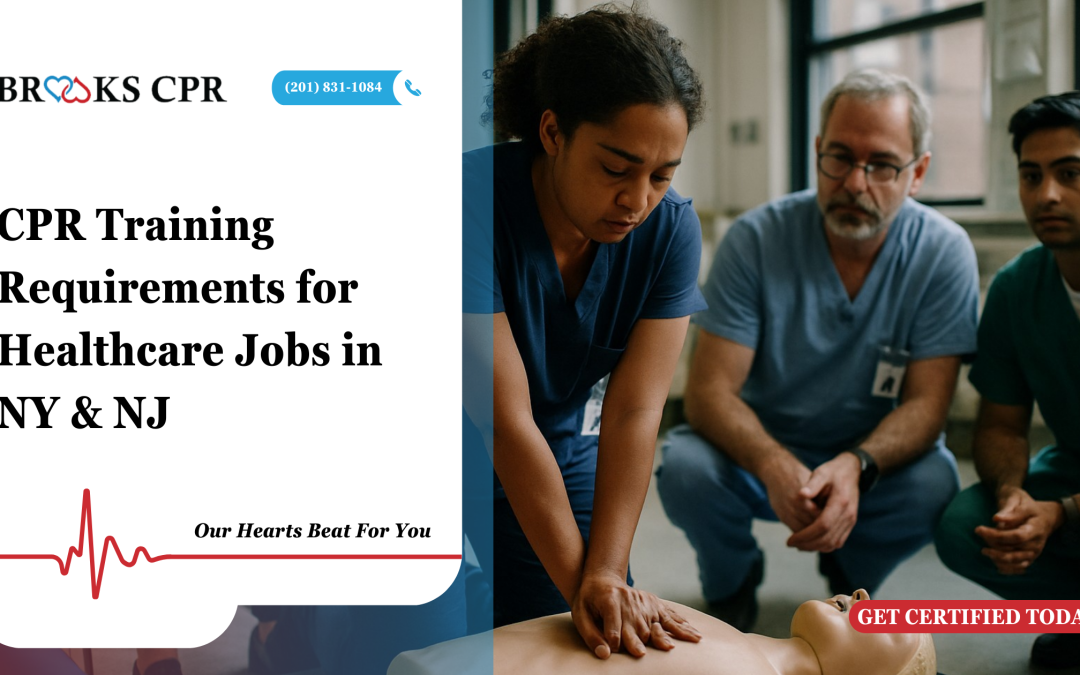
Starting or advancing in healthcare feels like a big step, doesn’t it?
Between figuring out educational requirements, licensing, and certifications, it’s easy to feel like there’s so much to keep track of. If CPR certification is on your list of “things to figure out,” you’re in the right place.
Whether you’re exploring online CPR certification because you need flexibility around work and family, or you’re simply trying to understand what your specific healthcare role will require in New York or New Jersey, we’ve got you covered.
Let’s walk through what healthcare professionals actually need to know about CPR requirements in NY and NJ.
What Are the CPR Certification Requirements for Healthcare Jobs in New York?
Most employers are pretty consistent about what they need, but there are a few important details that can make or break your application process.
Healthcare roles typically require BLS/CPR certification at the Healthcare Provider level, which goes beyond basic CPR training.
This comprehensive certification covers:
- Adult, child, and infant CPR techniques
- Proper use of AEDs (automated external defibrillators)
- Two-person assist methods
- Bag-valve-mask ventilation techniques
Think of it as the professional-grade version of CPR training—it’s designed specifically for people who will be working in medical settings where these skills might mean the difference between life and death.
Here’s something that catches many people off guard: employers in NY often have specific preferences about which certification brand they’ll accept.
While most recognize major providers like the American Heart Association and Red Cross, some facilities have exclusive agreements or strong preferences.
Your best bet?
Check with your HR department or facility’s education coordinator before you sign up for any course. It’s a quick phone call that can save you from having to retake your certification later.
When it comes to continuing education, your certification will typically be valid for two years from the date you complete it.
However, don’t assume that gives you a full two years of breathing room.
Some employers have their own renewal policies that might require you to recertify earlier, especially if you’re starting a new job close to your expiration date.
We’ve seen healthcare professionals need to renew six months early just to meet their new employer’s requirements.
Which Certifications Are Accepted in New York?
The good news is that New York healthcare employers generally accept certifications from well-established national organizations:
- American Heart Association (most widely recognized)
- Red Cross
- Emergency Care & Safety Institute
- National Safety Council
- Other accredited national providers
However, here’s a crucial point that surprises many people: completely online courses are generally not accepted for healthcare jobs.
While online learning can be convenient and cost-effective for many types of training, CPR certification for healthcare workers requires hands-on practice and skills demonstration.
You need to physically practice chest compressions, show proper hand placement, and demonstrate that you can effectively use emergency equipment.
No amount of video watching can replace the muscle memory and confidence that comes from actually performing these techniques under supervision.
That said, many accepted programs do offer a blended approach—you might complete some coursework online and then attend an in-person skills session.
This hybrid model gives you some flexibility while still ensuring you get the hands-on training that employers require and, more importantly, that could save someone’s life in an emergency.
CPR Certification Requirements for Healthcare Professionals in New Jersey
New Jersey takes a similarly serious approach to CPR requirements, though there are a few state-specific details that might affect your certification choice.
Whether you’re working in a major medical center in Newark or a small clinic in South Jersey, understanding these requirements upfront will help you choose the right training path.
Plus, New Jersey extends CPR requirements beyond just hospitals and clinics—you might be surprised by some of the other roles that require certification.
Most healthcare providers in New Jersey need BLS/CPR and Standard First Aid certifications that include comprehensive training across all age groups:
- Adult CPR techniques
- Child CPR techniques
- Infant CPR techniques
- AED operation and safety protocols
- Basic first aid procedures
What makes New Jersey unique is how broadly they apply these requirements.
The NJ Department of Health extends professional-level CPR requirements to roles you might not expect, including positions at camps, public bathing facilities, and various public health roles.
If you’re considering work in any of these areas, you’ll need the same level of certification as hospital staff.
School districts throughout New Jersey often have their own specific requirements that go beyond state minimums.
Teachers, support staff, coaches, and even some administrative roles may need current CPR certification.
Each district can set its own standards, so if you’re planning to work in education, it’s worth checking with the specific school system about their requirements.
Acceptable Course Types in NJ
New Jersey is pretty flexible when it comes to how you complete your CPR training, as long as you meet the hands-on requirements.
Blended formats are widely accepted and popular—you can complete the theoretical portion online at your own pace, then attend an in-person skills session to demonstrate your practical abilities.
This approach works well for busy healthcare professionals who need flexibility in their schedules.
However, just like New York, online-only certifications with no hands-on evaluation are NOT recognized by most employers and regulatory agencies in New Jersey.
The state understands that effective CPR requires muscle memory, proper technique, and the confidence that comes from practicing on actual training equipment.
For your certification, you can choose from several major certifying organizations that New Jersey recognizes:
- American Heart Association (gold standard for most facilities)
- Red Cross
- American Safety & Health Institute
- National Safety Council
- Emergency Care & Safety Institute
- Other nationally accredited providers
The key is making sure whichever organization you choose offers the hands-on component that New Jersey requires.
At Brooks CPR, we see many people who appreciate the blended approach—it gives them the convenience of online learning for the classroom portion while ensuring they get the practical experience that both employers and emergency situations demand.
Can I Use Online CPR Certification for Healthcare Jobs in NY & NJ?
This is probably one of the most common questions we get, and it’s completely understandable why people ask.
Online learning is convenient, often more affordable, and fits better into busy schedules—especially when you’re already juggling work, school, or family responsibilities.
The short answer is: it depends on what type of online course you’re considering.
Many providers do offer convenient online CPR courses, and they can be a great starting point for your certification journey.
However, for healthcare professionals, you must have an in-person or instructor-evaluated skills test as part of your training.
Think about it from a practical standpoint—when someone’s life is on the line, you need to know that you can perform effective chest compressions, properly position someone’s airway, and confidently use emergency equipment.
These are physical skills that require hands-on practice and real-time feedback from a qualified instructor.
The good news is that many employers in both New York and New Jersey accept blended (or “hybrid”) courses.
Here’s how these typically work:
- Complete the classroom learning portion online at your own pace
- Study materials, watch instructional videos, and take knowledge tests from home
- Attend a shorter in-person skills session to demonstrate your practical abilities
- Receive immediate feedback and correction from a certified instructor
This hybrid approach gives you the flexibility of online learning while still ensuring you get the hands-on training that employers require.
It’s often the best of both worlds—you can fit the theoretical learning around your schedule, then focus your in-person time on perfecting your technique and building confidence with the equipment.
What’s Covered in a Healthcare Provider CPR/BLS Course?
When you sign up for a Healthcare Provider CPR/BLS course, you’re getting much more than basic CPR training.
This comprehensive program is designed specifically for people who will be working in medical settings, so it covers the advanced techniques and scenarios you might actually encounter on the job.
Understanding what’s included can help you feel more prepared and confident going into your certification.
The course covers life-saving techniques across all age groups and emergency scenarios:
- Adult, child, and infant CPR – Different techniques for different body sizes and developmental stages
- AED operation – How to safely and effectively use automated external defibrillators
- Two-person team CPR procedures – Coordinating with colleagues during extended resuscitation efforts
- Bag-valve-mask ventilation – Providing assisted breathing when CPR alone isn’t enough
- Relief of choking (Heimlich maneuver) – Modified techniques for conscious and unconscious patients
- Responding to cardiac and respiratory emergencies – Recognizing symptoms and taking appropriate action
What makes this training particularly valuable is the hands-on component.
You’ll get extensive practice with professional-grade manikins that simulate real emergency conditions.
This isn’t just about going through the motions—you’ll learn proper compression depth, hand placement, and timing that could make the difference in a real emergency.
The course also covers critical workplace safety elements:
- Use of PPE and infection control – Protecting yourself and patients during emergencies
- Skills check-off with certified instructor – Demonstrating proficiency in all techniques before certification
Your instructor will watch you perform each skill and provide immediate feedback, ensuring you can confidently handle emergency situations when they arise.
This personalized evaluation is why purely online courses can’t substitute for proper healthcare provider training—there’s no replacement for having an experienced professional guide your technique and confirm your competency.
Continuing Education, Renewal, and Employer-Specific Needs in NY & NJ
Getting your initial CPR certification is just the first step—maintaining it requires some planning and attention to deadlines.
The good news is that once you understand the renewal process, it becomes much more manageable.
The key is staying ahead of your expiration date and understanding that different employers might have slightly different expectations.
Most healthcare CPR certifications are valid for two years from the date you complete your course. However, here’s where it gets important to pay attention to details:
- Track your expiration date carefully – Mark it in your calendar with reminders starting 3-4 months before expiration
- Plan for renewal options – Many providers offer shorter renewal courses for people who are already certified
- Consider your employer’s timeline – Some facilities want you to renew 30-60 days before expiration to avoid any gaps in coverage
Certain healthcare roles come with additional requirements that go beyond standard CPR certification.
EMTs, nurses, school staff, and other specialized positions may need supplementary certifications or proof of recent skills practice.
For example, some nursing positions require ACLS (Advanced Cardiac Life Support) in addition to basic BLS, while school districts might want additional first aid training.
Here’s something that catches people off guard: always verify requirements with your specific employer before enrolling in any certification program.
While the basic CPR/BLS requirements are fairly standard across New York and New Jersey, individual hospitals, clinics, and departments can have their own preferences.
Some facilities have contracts with specific training providers, others require certain course formats, and a few might even offer on-site training programs for their staff.
We’ve worked with people at brookscprnynj.com who discovered their new employer required a different certification brand than what they had, or needed additional components they hadn’t planned for.
A quick conversation with HR or your supervisor before you sign up can save you time, money, and the frustration of having to retake training.
Ready to Get Your CPR Certification?
Getting your CPR certification doesn’t have to be stressful.
At Brooks CPR, we make it simple and convenient for busy healthcare professionals.
Our instructors actually work in healthcare too, so they know what you’ll really need on the job.
We offer classes evenings and weekends because we get that your schedule is packed.
Ready to get started?
Check out our class times at brookscprnynj.com or give us a call if you have questions about which course is right for you.