
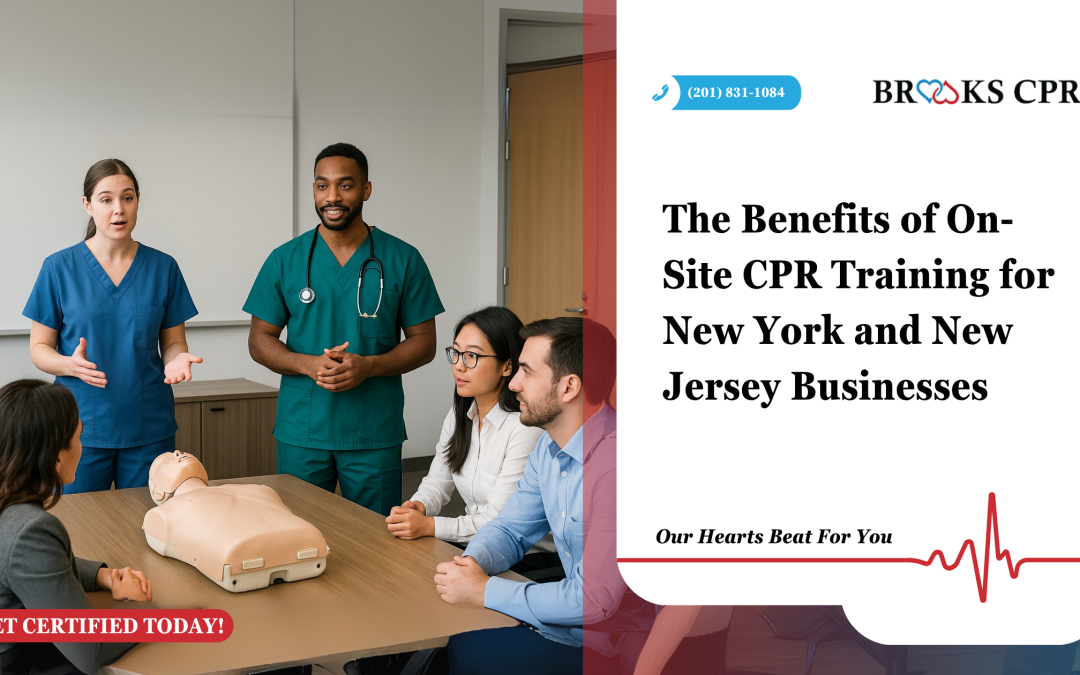
Picture this: it’s 2 PM on a busy Tuesday, and one of your longtime employees suddenly collapses in the hallway.
Your staff rushes to help, but beyond calling 911, they’re not sure what to do.
Those crucial minutes before the ambulance arrives could mean everything—or nothing—depending on whether your team knows CPR.
This scenario plays out in workplaces across New York and New Jersey more often than most business owners realize.
Our region’s fast-moving business environment, aging workforce, and high-stress work culture create the perfect storm for cardiac emergencies.
The difference between a close call and a tragedy often comes down to one thing: whether someone nearby knows how to respond.
In the following sections, we’ll walk through everything you need to know about bringing CPR training directly to your workplace.
From understanding the immediate benefits of familiar-environment training to navigating state regulations and building team confidence, this guide will show you why on-site CPR training is one of the smartest investments you can make for your business.
Immediate Relevance and Realism in the Workplace
Nothing beats learning CPR in the exact spot where you might need to use it.
When you train in your own workplace, you’re not just learning techniques—you’re preparing for real scenarios that could unfold right where you stand.
Familiar Environment
Think about it: if someone collapses in your office break room, you’ll know exactly where to find help, how much space you have to work with, and what obstacles might be in your way.
This familiarity removes the guesswork and panic that can freeze people during actual emergencies.
Training in your workplace also helps you identify potential challenges beforehand:
- Tight spaces between desks or equipment
- Heavy doors that might slow down emergency responders
- Locations of phones, AEDs, and first aid supplies
- Areas where emergencies are most likely to occur
Customized Scenarios
Every workplace has its own rhythm and risks.
A busy kitchen faces different challenges than a quiet office, and a retail floor has different considerations than a warehouse.
When we bring training to your location, we can create practice scenarios that mirror what you might actually encounter.
Your training becomes more than just generic techniques—it becomes a roadmap for your specific environment.
We’ll walk through realistic situations, like helping a customer who collapses near your entrance or assisting a coworker who has a cardiac event in a crowded meeting room.
This targeted approach builds confidence because you’re practicing exactly what you might need to do.
Enhanced Workplace Safety
When medical emergencies strike at work, your response can save lives.
Having CPR-trained employees on your team creates a safety net that protects everyone who walks through your doors, from longtime employees to first-time customers.
Lifesaving Skills
Cardiac arrest doesn’t give warnings, and brain damage can begin within just four to six minutes without oxygen.
When you have trained employees who can jump into action immediately, you’re dramatically improving someone’s chances of survival—sometimes by as much as 40%.
Your employees become everyday heroes equipped with skills that matter:
- Recognizing when someone needs CPR
- Performing chest compressions correctly and confidently
- Providing rescue breathing when needed
- Knowing when and how to call for professional help
Reduced Response Time
Even with the best emergency services, ambulances can take 8-12 minutes to arrive in busy NY and NJ areas—especially during rush hour traffic.
Those precious minutes before professional help arrives are where your trained employees make all the difference.
On-site training creates a workplace where help is always within reach. Instead of waiting and hoping, your team knows exactly what to do and can start lifesaving measures immediately.
This quick response doesn’t just buy time; it often means the difference between recovery and tragedy.
Use of AEDs
Many workplaces now have Automated External Defibrillators, but having the device is only half the battle.
Our on-site programs include hands-on AED training, so your employees know how to use this lifesaving equipment confidently and correctly.
AED training covers the essentials:
- When to use the device (and when not to)
- Proper pad placement and safety procedures
- Coordinating AED use with CPR
- Basic maintenance and troubleshooting
Meeting Regulatory and Compliance Standards
Staying compliant with local and state regulations protects your business and ensures you’re meeting your legal obligations.
New York and New Jersey have specific requirements that vary by industry, and understanding these rules helps you avoid costly penalties while keeping everyone safer.
NY/NJ Requirements
Different types of businesses face different requirements, and knowing what applies to your workplace is crucial.
Here’s what you need to know:
New York Requirements:
- Fitness facilities must have staff trained in CPR and AED use
- Summer camps require certified lifeguards and CPR-trained counselors
- Swimming pools and aquatic facilities need lifeguards with current CPR certification
- Some municipalities require CPR training for specific business licenses
New Jersey Requirements:
- Pool operators must maintain CPR certification
- Youth camps must have designated staff with CPR training
- Certain childcare facilities require CPR-certified employees
- Some counties have additional requirements for businesses serving vulnerable populations
In-Person Certification
Online CPR courses might seem convenient, but they don’t meet most regulatory standards that require hands-on, instructor-led training.
When inspectors or insurance companies review your compliance, they’re looking for certifications that include actual practice with real equipment.
Our on-site training exceeds these requirements because your employees get:
- Face-to-face instruction with certified professionals
- Hands-on practice with mannequins and AEDs
- Real-time feedback and correction
- Official certification cards that satisfy regulatory requirements
Documentation and Peace of Mind
Proper documentation isn’t just about checking boxes—it’s about protecting your business from liability and ensuring you can prove compliance when needed.
When we provide on-site training, you receive complete records that satisfy insurance companies, regulatory agencies, and legal requirements.
Your documentation package includes:
- Individual certification cards for each trained employee
- Training completion records with dates and instructor information
- Skills checklists showing competency verification
- Renewal tracking to help you stay current
This thorough documentation gives you confidence that you’re not just meeting minimum requirements—you’re exceeding them while genuinely improving workplace safety for everyone.
Convenience and Accessibility for Large Workforces
Managing training for dozens or hundreds of employees can feel overwhelming, especially when you’re trying to maintain normal business operations.
On-site CPR training removes the logistical headaches while ensuring your entire team gets the lifesaving skills they need.
Flexible Scheduling
Your business doesn’t stop for training, and it shouldn’t have to.
We work around your schedule, whether that means training during shift changes, holding sessions during slower business hours, or breaking large groups into smaller, manageable sessions throughout the week.
This flexibility means you can:
- Train employees without disrupting customer service
- Accommodate different shifts and departments
- Schedule makeup sessions for employees who missed the initial training
- Plan training during naturally quieter periods in your business cycle
Cost-Effective
When you add up the real costs of sending employees to off-site training, the numbers get expensive fast.
Beyond the training fees, you’re paying for travel time, mileage, and lost productivity while employees are away from work.
On-site training delivers better value:
- Group rates that decrease per-person costs significantly
- No travel expenses or time away from the workplace
- Reduced scheduling conflicts and missed training sessions
- Higher return on investment through improved workplace safety
For a typical 20-person business, on-site training can save thousands of dollars compared to individual off-site certifications, while ensuring everyone gets trained together using the same standards and procedures.
High Participation Rates
The easier you make training, the more employees will participate.
When training happens right at work, you eliminate the common barriers that prevent people from getting certified—like transportation issues, scheduling conflicts with personal time, or simply forgetting about off-site appointments.
Higher participation means:
- More comprehensive safety coverage across all shifts and departments
- Fewer gaps in emergency response capability
- Better compliance with regulatory requirements
- Stronger overall workplace safety culture
Building a Prepared and Cohesive Workforce
CPR training does more than teach lifesaving skills—it brings your team together around a shared commitment to safety and care.
When employees train together, they build trust and confidence that extends far beyond emergency situations.
Team Building
There’s something powerful about learning lifesaving skills alongside your coworkers.
CPR training naturally creates bonds between employees as they practice together, support each other through the learning process, and realize they can count on one another in critical moments.
- This shared experience builds:
- Trust between team members who know they’ll look out for each other
- Communication skills developed through practice scenarios
- Leadership qualities as some employees naturally step up during training
- Mutual respect that comes from working together toward an important goal
Employee Morale
When you invest in CPR training, you’re sending a clear message: your employees matter, and their safety is a priority.
This investment in their wellbeing doesn’t go unnoticed, and it pays dividends in employee satisfaction and loyalty.
Employees appreciate when their workplace:
- Provides valuable skills they can use both at work and in their personal lives
- Shows genuine concern for their safety and the safety of their families
- Offers professional development opportunities that could literally save lives
- Creates a culture where people take care of one another
Many employees tell us that CPR training was one of the most meaningful professional development experiences they’ve had, knowing they now possess skills that could save a life.
Confidence and Competence
There’s a world of difference between watching a CPR video and actually performing chest compressions on a mannequin with an instructor guiding you.
Hands-on training builds real confidence because employees know they’ve actually done it, not just read about it.
This confidence translates into:
- Faster response times during actual emergencies
- Better technique under pressure
- Willingness to step up and take action when others might hesitate
- Ongoing practice and skill maintenance
When employees feel competent in their emergency response skills, they’re more likely to use them when needed. That confidence could be the difference between someone standing by helplessly and someone jumping in to save a life.
Reducing Liability and Protecting Reputation
Every business owner knows that one emergency can change everything.
How your company responds to a medical crisis doesn’t just affect the person in need—it impacts your legal standing, your reputation, and your ability to operate with confidence.
Risk Mitigation
When someone has a medical emergency at your workplace, having trained staff who can respond appropriately protects you from potential negligence claims.
Courts and insurance companies look favorably on businesses that have taken proactive steps to prepare for emergencies, especially when those preparations include proper training and documentation.
Trained employees help reduce liability by:
- Providing immediate, appropriate care that can prevent worse outcomes
- Following established protocols that demonstrate your company’s commitment to safety
- Creating documented evidence of your proactive emergency preparedness
- Reducing the likelihood of panic-driven mistakes that could worsen a situation
Remember, it’s not just about avoiding lawsuits—it’s about doing everything reasonably possible to protect the people who trust you with their safety every day.
Public Image
Your response to emergencies becomes part of your company’s story.
When employees, customers, and the community see that you’ve invested in lifesaving training, they recognize a business that truly cares about people’s wellbeing.
This commitment to safety enhances your reputation in several ways:
- Customers feel more confident choosing a business that prioritizes safety
- Potential employees view your company as a responsible, caring employer
- Community leaders recognize your business as a positive local presence
- Insurance providers may offer better rates to well-prepared businesses
Word travels fast when a business handles an emergency well, and that positive reputation can last for years. Conversely, being unprepared for a crisis can damage your reputation in ways that take much longer to repair.
Business Continuity
Quick, effective emergency response keeps your business running smoothly even when the unexpected happens.
When your employees know how to handle medical emergencies calmly and competently, they minimize disruption to your operations and maintain the stable environment your customers expect.
Effective emergency response supports business continuity by:
- Reducing the time your workplace is disrupted during medical emergencies
- Preventing panic that can affect other employees and customers
- Maintaining professional operations even under stressful circumstances
- Demonstrating to stakeholders that your business can handle challenging situations
Taking Action: Your Next Step Toward a Safer Workplace
You’ve learned how on-site CPR training can transform your workplace safety, meet regulatory requirements, and protect your business while building a stronger, more confident team.
The question now isn’t whether you need this training—it’s when you’ll make it happen.
Your employees, customers, and community deserve to know that help is available when emergencies strike.
Don’t wait for a crisis to realize the importance of preparation—take action now to create a safer workplace for everyone.
Ready to bring lifesaving skills to your workplace?
Contact us to discuss how we can customize CPR training for your specific business needs.
We’ll work with your schedule, accommodate your space, and ensure your team gets the hands-on training they need to respond confidently when it matters most.
Your commitment to safety starts with a single decision. Make that decision today, and give your team the skills that could save a life tomorrow.