
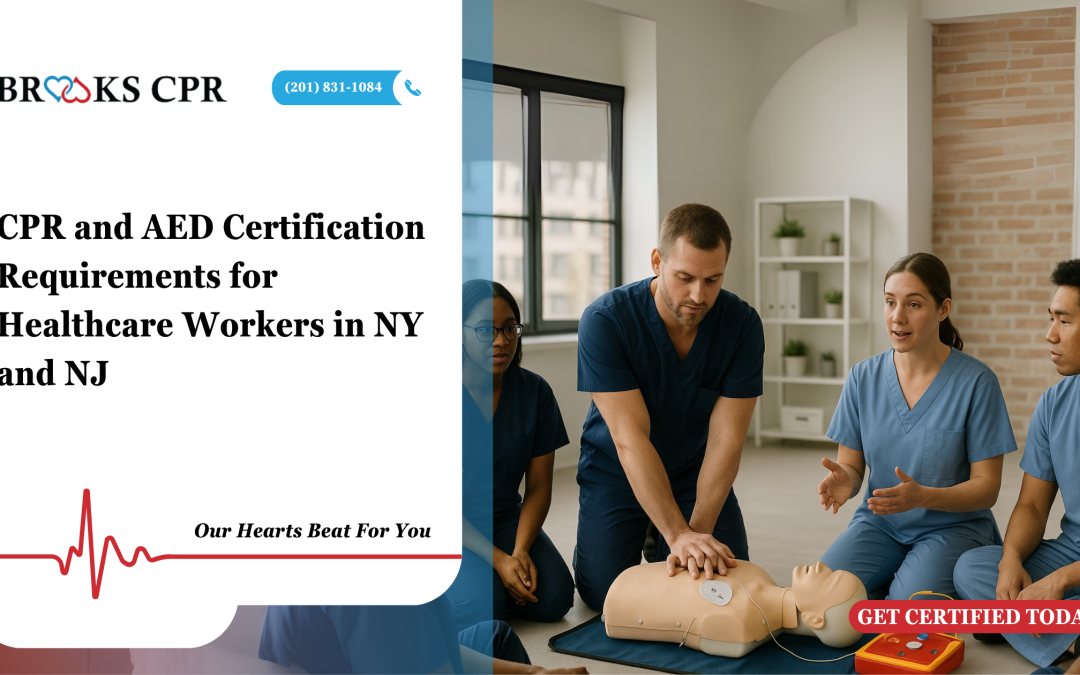
When you chose a career in healthcare, you accepted responsibility for protecting and preserving human life.
CPR and AED certification represents one of the most fundamental ways you fulfill that responsibility, ensuring you’re prepared to respond when someone’s heart stops beating and every second counts.
New York and New Jersey recognize the critical role healthcare workers play in emergency response, which is why both states maintain comprehensive certification requirements for medical professionals.
These requirements aren’t bureaucratic obstacles—they’re essential safeguards that ensure consistent, competent care across all healthcare settings in our region.
Your certification does more than satisfy regulatory requirements; it provides confidence, competence, and the knowledge that you can make a life-or-death difference when called upon.
Whether you’re working in a major metropolitan hospital or a small community clinic, maintaining current CPR and AED skills ensures you’re ready to honor the trust patients place in you every day.
Why CPR and AED Certification Is Mandatory in Healthcare Settings
Healthcare facilities can’t afford to have staff who freeze during cardiac emergencies.
Mandatory CPR and AED certification ensures that every healthcare worker possesses the skills and confidence needed to respond effectively when someone’s life hangs in the balance.
Cardiac Arrest Statistics and Survival Impact
The reality of cardiac arrest in healthcare settings is sobering but also hopeful.
While approximately 200,000 in-hospital cardiac arrests occur annually in the United States, healthcare facilities with well-trained staff achieve significantly better outcomes than emergency situations in the community.
Key statistics that drive certification requirements:
- Hospital cardiac arrest survival rates reach 25-40% with immediate CPR
- Every minute without CPR reduces survival chances by 7-10%
- AED use within the first 3 minutes can increase survival rates to over 70%
- Healthcare workers who maintain current certifications respond 40% faster than those with expired training
These numbers aren’t just statistics—they represent real patients, families, and communities that benefit when healthcare workers maintain their lifesaving skills.
Legal and Regulatory Framework
Both New York and New Jersey have established clear legal requirements that make CPR and AED certification non-negotiable for healthcare workers.
These regulations exist to protect patients and ensure consistent standards of care across all medical facilities.
New York Requirements:
- All licensed healthcare professionals must maintain current CPR certification
- Hospital staff must complete certification through American Heart Association or equivalent programs
- Facilities must document all staff certifications and renewal dates
- Failure to maintain certification can result in disciplinary action and facility penalties
New Jersey Requirements:
- Healthcare workers in licensed facilities must hold valid CPR/AED certification
- Certifications must include hands-on skills demonstration, not just online completion
- Some specialties require additional certifications (PALS, ACLS) beyond basic CPR
- Facilities face regulatory scrutiny during inspections for compliance documentation
Healthcare Workers as First Responders
Unlike other workplaces where medical emergencies are unexpected disruptions, healthcare facilities deal with life-threatening situations as part of normal operations.
This reality makes every healthcare worker a potential first responder who must be ready to step up when cardiac arrest strikes.
Healthcare workers serve as first responders by:
- Recognizing cardiac arrest symptoms immediately, often before patients realize what’s happening
- Initiating the chain of survival while other team members prepare advanced interventions
- Providing continuous, high-quality CPR until specialized equipment and personnel arrive
- Coordinating with emergency response teams who rely on their initial assessment and actions
The unique environment of healthcare settings means that first response often happens within seconds rather than minutes.
A nurse walking past a patient room, a technician working in a procedure area, or an aide helping with patient care might be the first person to encounter someone in cardiac arrest.
Their immediate response sets the tone for everything that follows, making their certification and preparedness absolutely critical to patient outcomes.
CPR and AED Certification Requirements in New York
New York State takes healthcare worker preparedness seriously, with comprehensive certification requirements that ensure every professional can respond effectively during cardiac emergencies.
These requirements vary by role and setting, but all share the same goal: maintaining the highest standards of patient safety across the state’s healthcare system.
State-Specific Mandates by Healthcare Role
New York’s approach to CPR certification recognizes that different healthcare professionals face different emergency scenarios, leading to role-specific requirements that match real-world responsibilities.
Licensed Nurses (RN/LPN):
- Must maintain current Basic Life Support (BLS) certification throughout licensure period
- Certification required for initial license application and all renewals
- Some specialty areas require additional Advanced Cardiovascular Life Support (ACLS) certification
Physicians and Physician Assistants:
- BLS certification mandatory for all practicing physicians
- Emergency medicine, cardiology, and critical care physicians typically require ACLS
- Pediatric specialists often need Pediatric Advanced Life Support (PALS) certification
Emergency Medical Technicians:
- Must hold current CPR certification appropriate to their EMT level
- Basic EMTs require Healthcare Provider CPR certification
- Advanced EMTs and Paramedics need additional certifications based on scope of practice
Healthcare Support Staff:
- Patient care technicians, medical assistants, and similar roles require BLS certification
- Certification level depends on direct patient contact responsibilities
- Some facilities extend requirements to administrative staff in patient care areas
Accepted Certification Types
New York State accepts certifications from several nationally recognized organizations, but not all CPR courses meet the state’s standards for healthcare workers.
The certification must specifically address healthcare provider scenarios and include hands-on skills verification.
Approved Certification Organizations:
- American Heart Association (AHA) – BLS Provider certification most commonly accepted
- American Red Cross (ARC) – CPR/AED for Professional Rescuers and Health Care Providers
- National Safety Council (NSC) – CPR and AED certification for healthcare providers
- Health & Safety Institute (HSI) – CPR certification for healthcare professionals
Each organization offers healthcare-specific training that covers scenarios unique to medical settings, including two-person CPR, bag-mask ventilation, and integration with advanced life support measures.
Role-Specific Requirements and Validity Periods
The complexity of healthcare environments means that different positions face different certification requirements, with validity periods designed to ensure skills remain current and sharp.
Hospital and Clinical Staff:
- BLS certification valid for 2 years from completion date
- Some departments require 6-month skills updates or competency checks
- Critical care areas often mandate additional certifications with 1-year validity
Emergency Medical Services:
- EMT certifications typically require CPR renewal every 2 years
- Some regions require annual skills verification sessions
- Advanced providers may need more frequent recertification based on protocols
School Health Personnel:
- School nurses must maintain BLS certification throughout employment
- Certification must include pediatric CPR and AED components
- Some districts require additional staff training beyond licensed personnel
Hands-On Skills and Training Requirements
New York State firmly requires hands-on skills demonstration for all healthcare provider CPR certifications.
Online-only courses do not meet state requirements for healthcare workers, ensuring that professionals can actually perform CPR when needed, not just understand the concepts.
Mandatory Skills Demonstration:
- Adult, child, and infant CPR techniques
- Proper AED operation and safety procedures
- Bag-mask ventilation skills
- Team-based resuscitation scenarios
Training Format Requirements:
- Instructor-led sessions with certified trainers
- Blended learning combining online theory with in-person skills practice
- Skills testing with immediate feedback and correction
- Scenario-based practice reflecting real healthcare environments
Special Considerations for School Settings
Schools present unique challenges that require specific attention to AED placement and staff training.
New York’s requirements for educational settings reflect the reality that school personnel may be the only trained responders available during emergencies.
AED Requirements in Schools:
- All public schools must have at least one AED on premises
- AEDs must be easily accessible during school hours and events
- Regular maintenance and battery checks required with documentation
Staff Training Requirements:
- At least one staff member per building must maintain CPR/AED certification
- Athletic programs require additional certified personnel during activities
- Some districts extend training requirements to coaches, security, and administrative staff
CPR and AED Certification Requirements in New Jersey
New Jersey’s healthcare certification requirements are detailed in state regulation N.J.A.C. 8:40A, which establishes comprehensive standards for healthcare worker preparedness.
These regulations ensure that patients receive immediate, competent care during cardiac emergencies regardless of which facility they visit across the state.
State Regulations for Healthcare Professionals
New Jersey’s regulatory framework covers a broad spectrum of healthcare workers, with specific requirements that reflect each profession’s role in emergency response.
The state’s approach emphasizes practical skills and regular competency verification.
Licensed Healthcare Professionals:
- All nurses, physicians, and allied health professionals must maintain current CPR certification
- Certification must be from approved organizations offering healthcare provider-level training
- EMTs and paramedics follow additional protocols specific to prehospital care
Healthcare Facility Staff:
- Patient care staff require Professional Rescuer or Healthcare Provider level certification
- Support staff with patient contact need appropriate certification level for their duties
- Facilities may set additional requirements beyond state minimums
Required Certification Levels and Providers
New Jersey specifically requires Professional Rescuer or Healthcare Provider level certification, recognizing that healthcare workers need training that goes beyond basic community CPR courses.
This requirement ensures that certified professionals can handle the complex scenarios they encounter in medical settings.
Acceptable Certification Levels:
- American Heart Association – BLS Provider (most common choice)
- American Red Cross – CPR/AED for Professional Rescuers and Health Care Providers
- National Safety Council – CPR and AED for Healthcare Providers
- Other nationally recognized organizations offering equivalent healthcare provider training
The state specifically excludes community-level CPR courses and online-only certifications from meeting healthcare worker requirements.
Mandatory Instructor-Led Training
New Jersey takes a firm stance against online-only certification for healthcare workers.
The state requires instructor-led training with hands-on skills verification, ensuring that healthcare professionals can actually perform CPR effectively under pressure.
Training Requirements:
- Face-to-face instruction with certified trainers
- Hands-on practice with mannequins and AED trainers
- Skills testing with pass/fail criteria
- Immediate feedback and skills correction during training
Why Online-Only Isn’t Accepted:
- Cannot verify actual skill performance
- Lacks real-time feedback and correction
- Doesn’t address equipment variations found in healthcare settings
- Fails to provide team-based scenario practice
Required Skills and Competencies
New Jersey’s requirements encompass the full range of skills healthcare workers need during cardiac emergencies.
These competencies reflect real-world scenarios that healthcare professionals encounter regularly.
Core Skills Requirements:
- Adult CPR with proper compression depth, rate, and recoil
- Child CPR adapted for pediatric physiology and anatomy
- Infant CPR including safe positioning and appropriate techniques
- AED operation including pad placement, safety protocols, and troubleshooting
- Bag-valve-mask ventilation for effective oxygen delivery
Advanced Competencies:
- Two-person CPR coordination and role switching
- Integration with advanced life support procedures
- Recognition of effective CPR and when to continue or stop
- Communication during team-based resuscitation efforts
Recertification and Documentation
Staying current with certification requires careful attention to renewal deadlines and proper documentation.
New Jersey healthcare facilities face regulatory scrutiny regarding staff certification compliance, making accurate record-keeping essential.
Recertification Intervals:
- Most certifications are valid for 2 years from the completion date
- Some facilities require more frequent skills updates
- Advanced certifications may have shorter validity periods
Documentation Requirements:
- Individual certification cards with clear expiration dates
- Employer records showing compliance for all required staff
- Skills verification documentation when required by facility policy
- Renewal tracking systems to prevent lapses in certification
Facility-Specific Requirements
While state regulations set minimum standards, many New Jersey healthcare facilities go beyond these requirements to ensure optimal patient safety.
Understanding both state mandates and employer expectations helps healthcare workers stay compliant and prepared.
Common Additional Requirements:
- Annual skills competency verification sessions
- Specialized certifications for high-risk departments
- Mock code training and team-based scenario practice
- Integration with facility emergency response protocols
Employer Discretion Areas:
- Additional certification requirements beyond state minimums
- More frequent renewal schedules
- Specific training organizations or programs
- Enhanced documentation and tracking requirements
Healthcare workers should verify their specific facility’s requirements, as these often exceed state minimums and may include additional competencies relevant to their particular work environment.
What CPR/AED Certification Covers
Healthcare provider CPR/AED certification goes far beyond basic community courses, addressing the complex scenarios and equipment that medical professionals encounter daily.
This comprehensive training ensures healthcare workers can respond effectively whether they’re facing a cardiac arrest in a busy emergency room or a respiratory emergency in a pediatric unit.
Basic Life Support (BLS) for Healthcare Providers
BLS certification forms the foundation of emergency response for healthcare workers, covering essential skills that every medical professional needs regardless of their specialty or work environment.
This training recognizes that healthcare workers often serve as the first link in the chain of survival.
Core BLS Components:
- High-quality chest compressions with proper depth, rate, and complete recoil
- Effective rescue breathing using appropriate techniques and equipment
- AED operation including safety protocols and troubleshooting
- Airway management techniques suitable for healthcare settings
- Team-based resuscitation coordination and communication
Healthcare-Specific Scenarios:
- Managing cardiac arrest in crowded patient care areas
- Coordinating with other healthcare providers during emergencies
- Integrating BLS with advanced life support interventions
- Handling equipment failures and backup procedures
The training emphasizes real-world application, with scenarios that mirror the actual challenges healthcare workers face when every second counts and multiple people need to work together seamlessly.
Age-Specific Protocols and Techniques
Healthcare workers encounter patients across all age groups, each requiring different approaches based on their unique physiology and anatomy.
Certification training covers these differences in detail, ensuring providers can adapt their techniques appropriately.
Adult CPR Protocols:
- Compression depth of at least 2 inches but no more than 2.4 inches
- Rate of 100–120 compressions per minute with minimal interruptions
- 30:2 compression-to-ventilation ratio for single rescuer scenarios
- Modified ratios for two-rescuer CPR with advanced airway management
Child CPR Adaptations (1 year to puberty):
- Compression depth of approximately 2 inches, adjusted for child’s size
- Same compression rate as adults but with careful attention to chest size
- 30:2 ratio for single rescuer, 15:2 for two healthcare providers
- Recognition of pediatric-specific cardiac arrest causes
Infant CPR Techniques (under 1 year):
- Two-finger or two-thumb encircling technique for compressions
- Compression depth of approximately 1.5 inches
- 30:2 ratio for single rescuer, 15:2 for two healthcare providers
- Special considerations for airway management in infants
Each age group requires different hand placement, compression techniques, and ventilation approaches, making this comprehensive training essential for healthcare workers who may encounter patients of any age.
AED Operation and Advanced Equipment Use
Healthcare settings feature sophisticated equipment that requires specialized training beyond basic AED operation.
Certification covers both standard AEDs and the advanced devices commonly found in medical facilities.
AED Skills and Knowledge:
- Proper pad placement for adults, children, and infants
- Safety protocols including clearing the patient and area
- Troubleshooting common device malfunctions
- Integration of AED use with ongoing CPR efforts
- Special considerations for patients with implanted devices or medication patches
Bag-Valve-Mask (BVM) Ventilation:
- Proper mask seal techniques for effective ventilation
- Appropriate ventilation rates and volumes
- Two-person BVM operation for optimal results
- Recognition of adequate chest rise and ventilation effectiveness
- Troubleshooting airway obstructions and equipment issues
Advanced Airway Considerations:
- Ventilation techniques with advanced airways already in place
- Coordination between compressions and ventilations with advanced devices
- Recognition of proper airway placement and function
- Adaptation of CPR techniques when advanced equipment is present
Bloodborne Pathogen Training Integration
Healthcare workers face unique exposure risks during emergency situations, making bloodborne pathogen awareness an essential component of comprehensive certification.
This training protects both providers and patients during high-stress emergency scenarios.
Bloodborne Pathogen Components:
- Understanding transmission risks during CPR and emergency care
- Proper use of personal protective equipment (PPE) during resuscitation
- Safe handling of contaminated equipment and materials
- Post-exposure protocols and reporting requirements
Practical Application During Emergencies:
- Balancing infection control with the urgency of lifesaving care
- Quick donning of appropriate PPE without delaying critical interventions
- Managing contaminated scenes while maintaining effective CPR
- Protecting other staff and bystanders from exposure risks
Healthcare Setting Considerations:
- Hospital-specific protocols for emergency response and infection control
- Integration with facility safety policies and procedures
- Recognition of high-risk patients and situations
- Coordination with environmental services for scene cleanup
This comprehensive approach ensures that healthcare workers can provide immediate, effective care while protecting themselves and others from potential exposures.
The training emphasizes that protecting yourself enables you to continue helping others, making safety protocols an integral part of effective emergency response rather than an obstacle to overcome.
The combination of these elements creates a certification program that prepares healthcare workers for the real challenges they face in medical settings, where technical skills must be combined with safety awareness, teamwork, and adaptability to provide the best possible patient outcomes during cardiac emergencies.
How to Get Certified: Training Centers and Course Options
Getting your CPR/AED certification as a healthcare worker involves choosing the right training organization and format that meets both state requirements and your professional needs.
With multiple options available throughout New York and New Jersey, finding quality training that fits your schedule has never been easier.
Major Certifying Organizations
Three primary organizations dominate healthcare provider CPR certification, each offering programs that meet state requirements while providing slightly different approaches to training and certification.
American Heart Association (AHA):
- Most widely recognized certification for healthcare providers
- BLS Provider course specifically designed for medical professionals
- Strong emphasis on team-based scenarios and communication
- Extensive research backing for training methods and protocols
- Accepted by virtually all healthcare employers and state agencies
American Red Cross (ARC):
- CPR/AED for Professional Rescuers and Health Care Providers
- Comprehensive training covering all required competencies
- Flexible scheduling options including weekends and evenings
- Strong reputation for hands-on skills development
- Widely accepted across healthcare settings
National Safety Council (NSC):
- CPR and AED certification for healthcare providers
- Focus on practical application and real-world scenarios
- Smaller class sizes often available
- Competitive pricing for group training
- Growing acceptance among healthcare employers
Each organization maintains rigorous standards and provides certification that meets New York and New Jersey requirements for healthcare workers.
Course Format Options
Healthcare workers have several training format options, though state requirements limit which formats qualify for professional certification.
Understanding these options helps you choose the best fit for your learning style and schedule.
In-Person Training:
- Traditional classroom format with immediate instructor feedback
- Hands-on practice with mannequins and actual AED devices
- Real-time skills correction and personalized coaching
- Team-based scenarios that mirror actual healthcare environments
- Required format for initial certification in both NY and NJ
Blended Learning:
- Online theory portion completed at your own pace
- In-person skills session for hands-on practice and testing
- Reduced classroom time while maintaining skills verification
- Popular option for busy healthcare professionals
- Meets state requirements when skills portion is instructor-led
Online-Only Courses:
- Not accepted for healthcare worker certification in NY or NJ
- May be suitable for community-level CPR training
- Cannot provide the hands-on skills verification required for professional certification
- Should be avoided by healthcare workers seeking compliant certification
Local Training Providers in New York
New York offers numerous training options across the state, with concentrations in major metropolitan areas where healthcare workers need convenient access to certification courses.
American Red Cross NYC:
- Multiple Manhattan locations with frequent class schedules
- Weekend and evening options for working professionals
- Group training available for healthcare facilities
- Comprehensive instructor support and follow-up resources
CPR Certification NYC:
- Specialized focus on healthcare provider training
- Small class sizes for personalized attention
- Flexible scheduling including same-day certification options
- Convenient locations throughout the five boroughs
CPRClassesNYC:
- Regular classes throughout Manhattan and outer boroughs
- Experienced instructors with healthcare backgrounds
- Competitive pricing and group discounts available
- Online registration with immediate confirmation
Brooks CPR:
- Specialized healthcare provider training throughout the NY/NJ region
- On-site training options for healthcare facilities
- Experienced instructors with clinical backgrounds
- Flexible scheduling to accommodate healthcare worker shifts
These providers offer consistent scheduling and maintain the high standards required for healthcare worker certification, making it easy to find training that fits your professional needs.
Local Training Providers in New Jersey
New Jersey’s training landscape includes both large health systems offering internal training and independent providers serving the broader healthcare community.
RWJBarnabas Health Training Center:
- Hospital-based training with clinical expertise
- State-of-the-art simulation facilities and equipment
- Classes designed specifically for healthcare environments
- Continuing education credits often available
American Red Cross NJ:
- Statewide locations with consistent training standards
- Regular schedules accommodating various work shifts
- Experienced instructors familiar with healthcare requirements
- Group training options for medical facilities
LifeSavers, Inc.:
- Independent training provider with healthcare focus
- Flexible scheduling including on-site training options
- Competitive pricing and quick turnaround times
- Personalized service and attention to individual needs
Brooks CPR:
- Comprehensive healthcare provider certification programs
- On-site training available for hospitals, clinics, and medical offices
- Experienced instructors who understand healthcare environments
- Convenient scheduling options for busy medical professionals
Course Duration, Costs, and Scheduling
Understanding the time and financial investment required for certification helps healthcare workers plan effectively and budget appropriately for this essential professional requirement.
Typical Course Duration:
- In-person BLS courses: 3–4 hours including skills testing
- Blended learning: 1–2 hours online plus 2–3 hours in-person
- Renewal courses: 2–3 hours focusing on skills update and new guidelines
- Group training: May extend duration to accommodate larger classes
Cost Expectations:
- Individual certification: $60–120 depending on provider and location
- Group training: $40–80 per person with volume discounts
- Renewal courses: Typically 20–30% less than initial certification
- Additional costs may include materials, parking, or continuing education credits
Scheduling Tips for Healthcare Workers:
- Book certification well before expiration to avoid lapses
- Consider renewal courses that may be shorter and less expensive
- Look for providers offering multiple time slots throughout the week
- Ask about makeup sessions if you can’t attend scheduled training
- Verify that certification cards will be available immediately after completion
Certification Renewal and Continuing Education
Maintaining current CPR/AED certification requires ongoing attention to renewal deadlines and staying updated with evolving protocols. Healthcare workers must balance busy schedules with the professional responsibility to keep their lifesaving skills sharp and compliant.
Typical Renewal Cycles
Most healthcare provider CPR certifications follow predictable renewal schedules, though specific timing can vary based on the certifying organization and your facility’s requirements.
Standard Renewal Periods:
- American Heart Association BLS: Valid for 2 years from completion date
- American Red Cross certification: 2-year validity period
- National Safety Council: 2-year renewal cycle
- Some facilities require annual skills updates regardless of certification validity
Renewal Timeline Planning:
- Begin renewal process 2–3 months before expiration
- Allow time for scheduling conflicts or course availability issues
- Consider that expired certifications may require full initial courses rather than shorter renewal classes
- Factor in processing time for new certification cards
Renewal Process and Requirements
Renewing your certification involves demonstrating that you’ve maintained your skills and knowledge of current protocols.
The process is typically streamlined compared to initial certification but still requires hands-on skills verification.
Refresher Course Components:
- Skills practice focusing on areas where protocols have changed
- Updated guidelines and technique modifications
- Hands-on testing to verify continued competency
- New scenarios reflecting current best practices
Skills Assessment Requirements:
- Demonstration of proper compression technique and timing
- AED operation including safety protocols
- Ventilation skills with bag-mask devices
- Team coordination during simulated emergencies
Documentation Needs:
- Current certification card or proof of previous certification
- Employer verification forms if required by facility
- Continuing education documentation for some specialties
- Photo identification for certification processing
Finding Renewal Classes in NY and NJ
Renewal classes are widely available throughout both states, often with more flexible scheduling than initial certification courses since they’re shorter and focus on skills updates rather than comprehensive training.
Renewal Class Options:
- Same providers who offer initial certification typically provide renewal courses
- Hospital education departments often offer renewal training for their staff
- Professional associations may sponsor renewal sessions for members
- Online registration systems make finding and booking classes easier
- Brooks CPR offers convenient renewal courses with flexible scheduling for healthcare professionals
Scheduling Considerations:
- Renewal classes often offered more frequently than initial certification
- Evening and weekend options accommodate working healthcare professionals
- Some providers offer express renewal sessions for experienced professionals
- Group renewal sessions may be available for entire departments or facilities
Staying Current with Guidelines and Protocols
CPR guidelines evolve based on ongoing research and clinical evidence, making it essential for healthcare workers to stay informed about changes that affect their practice.
Recent Guideline Updates:
- Emphasis on high-quality compressions with minimal interruptions
- Updated compression depth and rate recommendations
- Enhanced focus on team communication during resuscitation
- Integration of CPR with advanced cardiovascular life support protocols
Staying Informed Between Renewals:
- Subscribe to updates from your certifying organization
- Attend facility-based skills practice sessions
- Participate in mock codes and emergency drills
- Review current literature on resuscitation science
Professional Development Opportunities:
- Advanced certifications like ACLS or PALS for specialized roles
- Instructor certification to teach CPR to colleagues
- Participation in quality improvement initiatives related to cardiac arrest response
- Continuing education programs that include CPR skill updates
Maintaining current certification demonstrates your commitment to patient safety and professional excellence.
The relatively small investment in renewal training pays significant dividends in confidence, competence, and compliance with professional standards that protect both you and the patients you serve.
Your Professional Responsibility, Our Commitment to Excellence
Maintaining current CPR and AED certification isn’t just about meeting regulatory requirements—it’s about honoring the trust that patients, families, and colleagues place in you every day.
When someone’s life hangs in the balance, your training and preparedness become their lifeline.
The healthcare landscape in New York and New Jersey demands nothing less than excellence from its professionals.
Ready to ensure your certification meets the highest standards?
Brooks CPR understands the unique challenges healthcare workers face in New York and New Jersey. Our experienced instructors, flexible scheduling options, and comprehensive training programs are designed specifically for busy healthcare professionals who refuse to compromise on quality.
From individual certifications to facility-wide training programs, we’re here to help you maintain the skills that make you an invaluable part of your healthcare team.
Your patients deserve healthcare providers who are prepared for anything.
Make sure you’re ready to answer that call.