
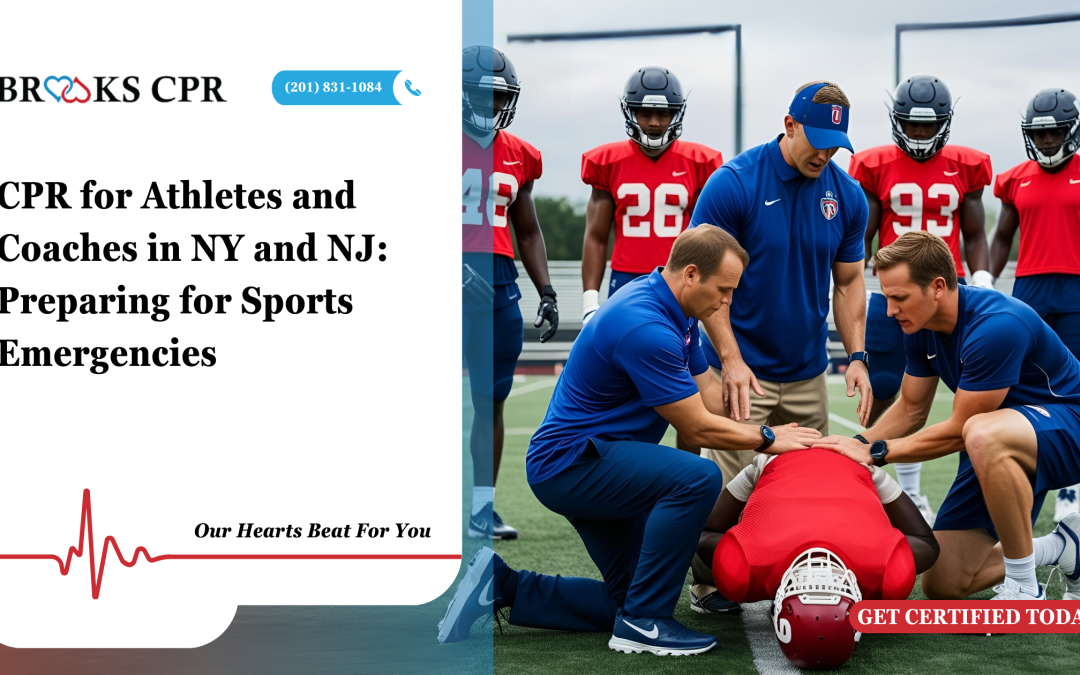
The playing field, court, or gym is where athletes push their limits and coaches guide them to excellence.
Yet these same environments can quickly transform into emergency scenes when cardiac incidents occur.
Proper CPR training for sports professionals isn’t just a good idea—it’s an essential component of comprehensive athletic program safety.
Understanding the Unique Risks in Athletic Environments
Athletes face distinctive cardiac risks that differ significantly from those experienced by the general population.
High-intensity training regimens, extreme environmental conditions, and the potential for undiagnosed heart conditions create a perfect storm of cardiac risk factors that demand specialized emergency preparedness.
Commotio Cordis: A Sports-Specific Danger
- Definition and mechanism: This rare but catastrophic condition occurs when a blunt, non-penetrating impact to the chest wall directly over the heart occurs at a precise moment in the cardiac cycle, triggering ventricular fibrillation
- High-risk sports: Baseball, softball, hockey, lacrosse, and martial arts see higher incidence rates due to the combination of projectile objects and limited chest protection
- Survival statistics: Without immediate CPR intervention, survival rates drop by approximately 10% for each minute that passes, making on-field response capabilities critical
Exertion-Related Cardiac Events
Young athletes experiencing sudden cardiac arrest typically show different patterns than adult cardiac emergencies.
While adults often have underlying coronary artery disease, young athletes more commonly experience arrest due to structural heart abnormalities that may go undetected during standard physical examinations.
The first symptom can tragically be sudden collapse during exertion, making immediate CPR response the difference between life and death.
Environmental Factors in NY and NJ
The Northeast’s climate creates additional cardiovascular stressors that sports programs must prepare for.
Summer humidity coupled with high temperatures increases the cardiac workload during training, while winter sports programs face cold-induced vasoconstriction that can exacerbate underlying cardiac conditions.
Each season brings unique risks that comprehensive CPR training addresses.
Legal and Ethical Responsibilities for Sports Programs
Athletic programs throughout New York and New Jersey operate under increasingly comprehensive duty-of-care obligations that extend beyond traditional coaching responsibilities.
Understanding these requirements helps programs meet both their ethical and legal obligations to participants.
Current Regulatory Requirements
NY and NJ have implemented specific legislation regarding emergency preparedness in athletic settings.
New Jersey’s Janet’s Law requires schools to have AEDs and trained responders, while New York’s similar regulations establish minimum standards for emergency response capabilities at athletic facilities.
Your certification helps programs maintain compliance while demonstrating commitment to participant safety.
Liability Considerations
Recent court decisions have established clear precedent regarding the standard of care expected from coaches and athletic directors.
Programs without proper emergency response protocols and trained personnel face significant liability exposure, with recent settlements in both states exceeding seven figures.
Proper certification and preparation significantly reduce this liability risk while fulfilling your fundamental obligation to athlete safety.
The Coach’s Expanded Role
The modern coaching role extends far beyond teaching technique and strategy—it encompasses comprehensive athlete welfare responsibilities.
CPR certification represents a foundational component of these expanded duties, particularly as parents and administrators increasingly expect coaches to provide complete care for their athletes.
Your certification demonstrates a professional approach to these expanded responsibilities.
Sport-Specific CPR Applications and Techniques
Standard CPR protocols require modification for athletic contexts, particularly regarding equipment, playing surfaces, and common injury combinations.
Understanding these adaptations enhances response effectiveness in real-world sports emergencies.
Navigating Protective Equipment
Athletic equipment presents unique challenges during emergency response that rarely appear in standard CPR training.
Shoulder pads, helmets, chest protectors and other gear may need quick removal or modification to enable effective compressions.
Brooks CPR training specifically addresses these scenarios, teaching equipment management techniques that maintain C-spine protection while enabling rapid CPR initiation.
Field Surface Considerations
The surface where an athlete collapses significantly impacts CPR mechanics.
Natural turf, artificial fields, hardwood courts, and ice surfaces each require subtle modifications to hand positioning and body mechanics to maintain effective compressions.
Managing Team Response
Athletic emergencies typically involve multiple responders with varying levels of training, from assistant coaches to athletic trainers to emergency medical personnel.
Establishing clear command structures and role assignments prevents the chaos that often compromises response effectiveness.
Our certification program includes specific modules on coordinating multi-responder scenarios common in athletic environments.
Integrating CPR Into Comprehensive Emergency Action Plans
Isolated CPR skills provide limited value without integration into broader emergency response frameworks.
Developing comprehensive protocols ensures coordinated response when seconds matter most.
Venue-Specific Planning
Every athletic facility presents unique emergency response challenges regarding access points, AED locations, and communication systems.
Effective emergency action plans account for these specific characteristics, with clear protocols tailored to each venue where your team practices or competes.
Our certification program helps coaches develop these customized plans as part of the training process.
Communication Protocols
Clear communication channels during emergencies prevent critical delays in response activation.
Establishing specific terminology, designated communicators, and backup systems ensures that appropriate resources mobilize immediately when cardiac emergencies occur.
Our training emphasizes communication frameworks that eliminate confusion during high-stress situations.
Regular Simulation Drills
Emergency skills deteriorate without regular practice, particularly in high-stress scenarios like athletic emergencies.
Implementing regular team drills that simulate various emergency scenarios maintains response readiness while identifying potential gaps in your emergency action plan.
Brooks CPR provides templates for conducting these essential practice sessions.
Recognizing Early Warning Signs in Athletes
Prevention represents the best form of emergency management.
Coaches trained in recognizing prodromal symptoms can often intervene before catastrophic events occur, potentially saving lives through early recognition.
Pre-Participation Screening Enhancement
While standard medical clearance processes provide baseline safety screening, coaches with cardiac emergency training develop enhanced observational skills that may identify concerning patterns missed in routine examinations.
Symptoms like disproportionate fatigue, syncope during exertion, or unusual shortness of breath warrant medical evaluation before they escalate to emergency situations.
Environmental Monitoring Skills
CPR certification training includes education on recognizing environmental conditions that increase cardiac risk.
Heat index guidelines, lightning safety protocols, and cold weather precautions become second nature to certified coaches, enabling proactive risk management rather than emergency response.
These preventative aspects of certification often prove equally valuable to the emergency response skills.
Psychological Preparation Benefits
Athletes respond to emergencies based largely on their coach’s demonstrated confidence and competence.
Certification provides not just technical skills but also the psychological readiness to manage crises effectively.
This confidence communicates itself to athletes, reducing panic reactions that can complicate emergency management efforts.
Special Considerations for Youth Sports Programs
Youth athletics present distinct emergency response challenges that differ significantly from adult and professional sports contexts.
Age-appropriate modifications and parental involvement considerations require specialized approaches.
Anatomical and Physiological Differences
Pediatric CPR techniques differ from adult protocols in compression depth, airway management, and rescue breathing techniques.
Youth coaches must understand these modifications to provide effective emergency care for younger athletes whose physical characteristics require different approaches than standard adult CPR provides.
Parental Communication Frameworks
Youth sports emergencies involve immediate communication with parents and guardians—a dimension absent from adult sports contexts.
Establishing clear channels for emergency notification and developing scripts for different emergency scenarios prepares coaches to handle both the medical emergency and the parental communication components simultaneously.
Psychological Impact Management
Young athletes witnessing teammate emergencies often experience significant psychological trauma that requires immediate and ongoing management.
CPR-certified coaches learn to delegate psychological support responsibilities within their emergency action plans, ensuring that witnesses receive appropriate care while emergency response proceeds.
Getting Certified Through Brooks CPR
Obtaining sports-specific CPR certification requires surprisingly little time commitment compared to its potential impact on athlete safety.
Our specialized programs for athletic contexts make certification accessible and relevant to busy sports professionals.
Sport-Specific Certification Options
Brooks CPR offers specialized certification pathways designed specifically for athletic contexts, with content focused on scenarios most likely to occur in sports environments.
These targeted programs eliminate irrelevant content while emphasizing the emergency types coaches and athletes most commonly encounter.
Team Certification Programs
Athletic programs throughout NY and NJ can arrange on-site certification sessions for entire coaching staffs, creating shared emergency response frameworks while fulfilling organizational compliance requirements.
These team-based certifications ensure consistent protocols across all program personnel, enhancing emergency response coordination.
Recertification and Continuing Education
Sports medicine continuously evolves, with emergency response protocols regularly updating based on new research.
Our recertification programs incorporate the latest evidence-based practices while refreshing foundational skills, ensuring your emergency response capabilities remain current and effective throughout your coaching career.
Conclusion: The Ultimate Coaching Responsibility
While championships and athletic development rightfully occupy much of a coach’s focus, emergency preparedness represents the most fundamental coaching responsibility.
CPR certification provides the skills and confidence to fulfill this essential duty, ensuring you’re prepared for the emergency scenarios every coach hopes never to encounter but must be ready to manage.
Your certification might be the difference between a tragic outcome and a life saved on the field, court, or track.
Ready to enhance your emergency response capabilities and fulfill your duty of care?
Visit Brooks CPR to explore our sports-specific certification options designed for coaches and athletes throughout NY and NJ.
Your athletes and their families deserve the security of knowing you’re prepared for any emergency.