
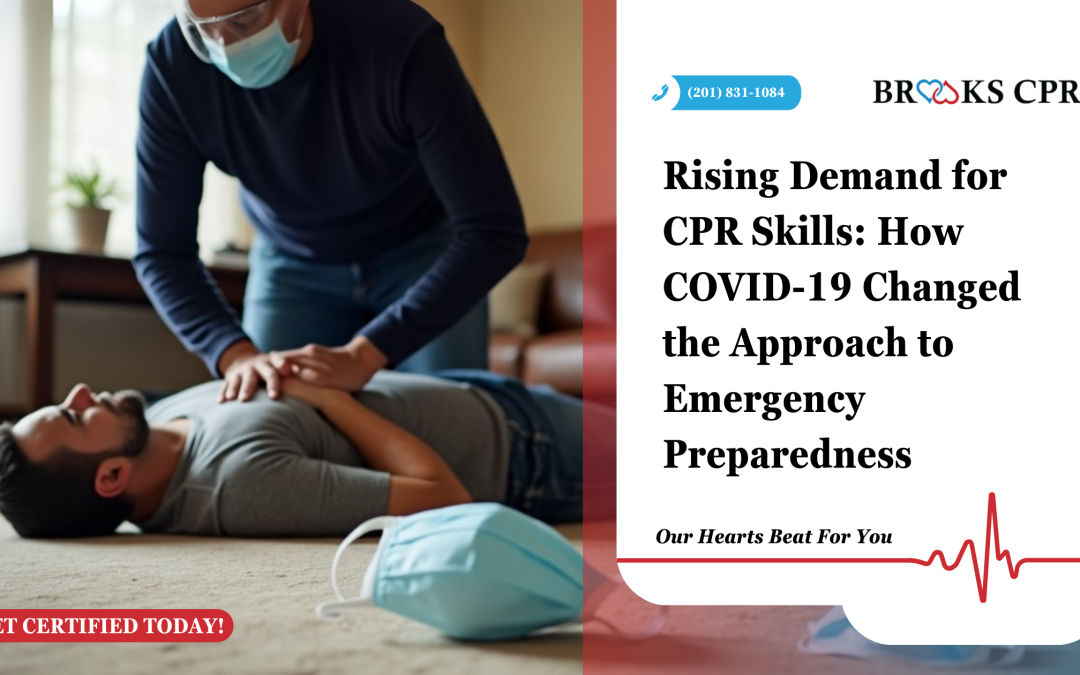
Remember when COVID-19 turned our world upside down?
Beyond masks and social distancing, it sparked something remarkable: a surge in everyday people wanting to learn CPR.
In this article, we’ll dive into why more of your neighbors are learning this critical skill, and how training methods were adopted during the pandemic (hands-only CPR, anyone?), and what this means for community resilience going forward.
Whether you’re CPR-certified or just curious, you’ll discover how these simple skills became an essential part of our collective emergency preparedness toolkit—and why that matters for all of us.
Stay tuned as we explore the surprising silver lining of pandemic-era emergency response!
The Impact of COVID-19 on Cardiac Arrest Incidents
COVID-19 didn’t just change our daily lives—it dramatically transformed cardiac emergency care.
Let’s look at what really happened when heart emergencies and a global pandemic collided.
Rising Cardiac Arrest Cases During The Pandemic
The numbers tell a compelling story.
Regions worldwide saw out-of-hospital cardiac arrests (OHCAs) skyrocket—Lombardy, Italy experienced a 58% jump in the first 40 days alone.
When researchers analyzed over 35,000 OHCA events globally, they found a staggering 120% increase across communities of all sizes.
This wasn’t just an issue during outbreak peaks.
The U.S. dealt with consistently high rates throughout the pandemic, while England reported a 50% higher risk of OHCA hospital admissions.
Meanwhile, hospital visits for heart-related emergencies dropped by nearly half compared to 2019—suggesting many cardiac events were happening at home or in public settings without immediate medical attention.
Perhaps most concerning?
These elevated cardiac arrest rates persisted even when COVID case numbers weren’t surging, pointing to lasting heart health impacts throughout our communities.
Changes In Survival Rates And Outcomes
As cardiac arrests increased, survival rates took a devastating hit.
Return of spontaneous circulation (ROSC) rates after cardiac arrest dropped dramatically—from 25% to 11% in New York, 31% to 18% in Northern Italy, and 23% to 13% in Paris.
For COVID-19 patients experiencing in-hospital cardiac arrest, the outlook was even bleaker, with less than 2% surviving to discharge.
The data confirmed what emergency responders were witnessing: COVID-19 patients faced nearly four times higher risk of death from cardiac arrest than non-COVID patients.
Even in 2022, survival rates remained below pre-pandemic levels, having improved only slightly from the 2020 low point.
Direct Vs. Indirect Effects Of COVID-19
The connection between COVID-19 and increased cardiac arrests isn’t straightforward.
The virus itself can trigger serious heart problems through respiratory distress, immune system overreaction, direct heart tissue damage, and increased blood clotting.
But indirect factors played an equally important role:
- Many people avoided hospitals due to infection fears
- Emergency response times increased
- Healthcare systems struggled with limited resources
- Routine cardiology appointments were canceled
- Lockdowns reduced physical activity for many
A French study confirmed these indirect effects weren’t minor—they found that actual COVID infections accounted for only one-third of the total increase in cardiac arrests.
This tells us something crucial: the pandemic’s reach extended far beyond those who contracted the virus.
Today, healthcare systems continue adapting their emergency protocols as cardiac care evolves in response to these lasting changes.
Understanding these shifts helps all of us appreciate why community CPR skills have become more important than ever before.
Evolution of CPR Guidelines During the Pandemic
When COVID-19 hit in early 2020, resuscitation experts faced a heart-wrenching dilemma: how to save cardiac arrest victims while keeping rescuers safe from a potentially deadly virus.
This challenge sparked rapid changes to CPR guidelines that continue to influence emergency response today.
Original Safety Concerns and Protocol Adjustments
Medical professionals quickly recognized that CPR could potentially aerosolized virus particles.
Chest compressions and ventilation techniques might spread SARS-CoV-2 through the air, putting first responders at significant risk.
Resuscitation councils worldwide sprang into action.
By April 2020, the European Resuscitation Council had released COVID-adapted CPR guidelines.
These changes aimed to address what experts called “thanatophobia” – the profound fear of dying from COVID-19 that was leaving many cardiac arrest victims without assistance.
Interestingly, early research showed that chest compressions alone didn’t generate significant airborne particles. Nevertheless, experts recommended placing a mask over the patient’s face, particularly since defibrillation might be needed during resuscitation.
AHA’s Temporary Guidance for Bystander CPR
The American Heart Association issued interim guidelines that carefully balanced infection risks against the need for immediate action.
Their recommendations for bystanders included:
- Performing hands-only CPR without mouth-to-mouth ventilation
- Covering the victim’s nose and mouth with cloth or face mask before starting compressions
- Using an automated external defibrillator (AED) when available, as it wouldn’t generate aerosols
Importantly, the guidelines acknowledged that most out-of-hospital cardiac arrests occur at home, where bystanders are typically family members who have already been exposed to the victim. This reality helped shape pandemic-era CPR approaches.
Keeping Rescuers Safe While Saving Victims
Throughout the pandemic, the AHA maintained that “the risk of death from cardiac arrest is very high and the chance of death increases with each minute CPR is delayed.”
This perspective supported their guidance that CPR should still be performed on suspected COVID-19 patients.
For healthcare providers, personal protective equipment became mandatory before initiating CPR.
By January 2022, the AHA had updated their guidance, emphasizing that all healthcare providers should wear respirators (like N95 masks), gowns, gloves, and eye protection when assisting suspected COVID-19 patients.
Research supported these balanced approaches. Studies revealed that while people were initially less willing to perform chest compressions on strangers during the pandemic, their willingness increased substantially when simple protective equipment was available.
Special Considerations for Pediatric Resuscitation
The pandemic necessitated unique modifications to resuscitation protocols for children.
Unlike adult guidelines focusing on compression-only CPR, pediatric guidance maintained ventilation as essential.
Research showed that children receiving both chest compressions and ventilations had better survival rates than those receiving compressions alone.
For newborns, delays in providing positive pressure ventilation resulted in higher mortality risks.
Pediatric guidelines emphasized that ventilations should follow standard AHA protocols for children with suspected COVID-19, with appropriate PPE use. These distinctions recognized that children and adults have different underlying causes for cardiac arrest, with respiratory failure being predominant in pediatric cases.
How First Responders Adapted Their Approach
COVID-19 put our first responders in a tough spot.
They had to completely change how they handled cardiac arrests while keeping themselves safe and still helping their communities.
How NYPD and Other Agencies Changed Their Approach
In April 2020, New York’s first responders got some surprising new instructions: don’t take cardiac arrest patients to the ER if you couldn’t get their heart beating again in the field.
This was a big change from their usual way of doing things. The Regional Emergency Medical Services Council of New York City said to stop CPR after 20 minutes if monitors showed no hope for revival.
The FDNY added more guidelines for their EMTs, though these only applied to adults.
Fire teams were told to avoid responding to most “difficulty breathing” or “unconscious person” calls to reduce their exposure to the virus and save protective equipment.
The changes went beyond just CPR rules.
As hospital wait times grew longer, firefighters stepped in to drive ambulances so both paramedics could care for patients in the back. FDNY ambulances also got equipped with Lucas devices – machines that automatically perform chest compressions during CPR.
Working With Protective Equipment
First responders had to wear full protective gear during resuscitation attempts.
The CDC identified CPR and intubation as high-risk procedures that could spread the virus through the air.
This meant healthcare workers needed complete PPE – N95 masks, gowns, gloves, and eye protection – before even entering a cardiac arrest patient’s room, even if it meant delaying care.
Emergency teams had to follow these rules carefully. Medical experts came up with a practical solution: placing plastic sheets between patients and providers during chest compressions to reduce virus spread.
The Toll On Emergency Workers’ Mental Health
The pandemic hit emergency personnel hard emotionally.
A study in the Journal of Psychiatric Research found that over half of doctors, nurses and emergency responders caring for COVID-19 patients faced risk for at least one mental health problem.
The numbers tell the story:
- 88% felt more stressed than before the pandemic
- 84.6% reported lower morale in their agencies
- 70.9% said their mental health had gotten worse
- 31.9% were drinking more alcohol
Dr. Andrew Smith from the University of Utah Health Occupational Trauma Program described healthcare workers’ experience as similar to “domestic combat”.
Research showed that emergency workers providing direct care had higher chances of risky drinking, while those in management positions were more likely to experience anxiety, alcohol misuse, and sleep problems.
Challenges In CPR Training During Lockdowns
The pandemic lockdowns created huge challenges for CPR training programs right when NY and NJ needed these life-saving skills more than ever.
Training organizations struggled to keep up with certification requirements while following social distancing rules.
Certification Delays and Extensions
The American Heart Association took emergency action in March 2020 by extending CPR certification deadlines.
They started with 60-day extensions and later pushed it to 120 days for cards that expired between March and June.
Training centers could give professionals in hard-hit areas an extra 120 days if their cards expired in July.
The North Carolina Dental Board also helped by temporarily accepting provisional certifications without in-person manikin training, though full certification was required once restrictions lifted.
The Shift To Virtual Learning Platforms
Online platforms became the go-to solution when in-person training wasn’t possible.
Studies showed that people who learned CPR online actually did better at scene safety assessment, emergency response, and remembered more compared to traditional classroom training.
Traditional face-to-face sessions still produced better results for hand placement and compression depth.
Money was a major roadblock to CPR training.
Most people said cost was their biggest challenge. Transportation and childcare made things even harder, especially in low-income areas.
Hands-On Skills Assessment Innovations
Several state-of-the-art approaches emerged to handle the crucial hands-on training component:
- Remote Skills Verification (RSV) that connected students with instructors through webcams for personalized feedback
- Single Use Manikin Option (SUMO) kits that let people practice physically at home
- Web-based compression rate feedback technology that measured effectiveness during online sessions
These adaptations helped keep training going while protecting public health.
All the same, people without internet access or technology faced ongoing challenges, and many said they relied on online resources that weren’t accessible to everyone.
Public Perception and Willingness to Perform CPR
People became less willing to perform CPR during the COVID-19 pandemic.
Data shows bystander intervention rates dropped from 61% to 51% during this period. This created a dangerous situation where cardiac events posed two threats – the cardiac arrest itself and the lower chance of getting life-saving help.
Hesitancy Factors During The Pandemic
Research identified several barriers that stopped people from performing CPR during COVID-19.
We noticed fear of virus transmission through close contact caused major hesitation.
The willingness to check breathing or pulse dropped 10.7% for strangers and 1.2% for family members compared to before the pandemic.
People’s readiness to do chest compressions decreased by 14.3% for strangers and 1.6% for family members.
Rescue breaths saw the biggest decline, falling 19.5% for strangers and 5.5% for family members.
People had other concerns beyond infection risks:
- They worried about causing more harm than good (52.4%)
- They lacked CPR knowledge and skills (42.9%)
- They weren’t sure if CPR was needed (40.0%)
Household vs. Public Setting Considerations
The relationship between the rescuer and victim played a vital role in CPR decisions.
Family members at home were seen as the safest option to provide CPR since they likely had exposure if the patient had COVID-19. This became more relevant because about 70% of cardiac arrests happened at home.
A surprising trend emerged – 74.5% of people who reported negative attitudes toward CPR still showed positive behaviors about helping others, especially at home. This showed how complex the decision-making process was during emergencies.
Strategies To Overcome Bystander Reluctance
Protective equipment proved most effective at increasing intervention rates.
People’s willingness to perform CPR increased by 8.3% for strangers when PPE was available.
About 41.1% felt more confident with gloves, while 64.2% preferred having masks.
Experts suggested hands-only CPR with the victim’s face covered instead of avoiding help altogether. This approach minimized exposure risk.
Public health campaigns reminded everyone that bystander CPR remained vital despite the pandemic.
The message was clear – without quick help, survival chances were poor, but the risk of catching COVID-19 through proper hands-only CPR stayed relatively low.
Moving Forward Together With CPR Training
The pandemic fundamentally changed emergency cardiac care in ways that will remain with us.
Though survival rates have improved since those early days, they haven’t fully returned to pre-pandemic levels.
At Brooks CPR NY-NJ, we’ve witnessed how access to protective equipment and simpler approaches like hands-only CPR helped maintain intervention rates during challenging times.
Many pandemic-era adaptations—virtual training options, enhanced safety protocols, and accessible learning tools—have proven their value alongside traditional in-person instruction.
We continue incorporating these lessons into our CPR training programs, ensuring our NY-NJ communities have the life-saving skills they need, whatever challenges may come.