
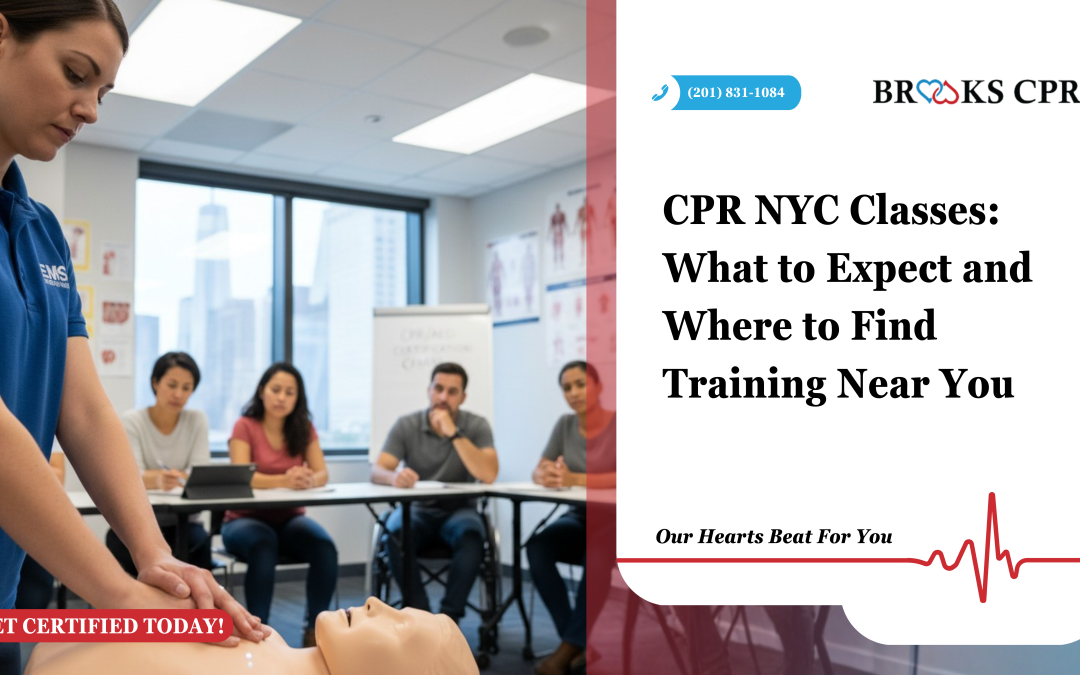
What’s a CPR class actually like?” It’s one of the most common questions people ask before signing up, and it makes sense—you want to know what you’re walking into.
If you’re looking for CPR NY classes, whether for a career requirement or personal reasons, understanding the format, time commitment, and certification process helps you choose the right course.
The reality is that these classes are designed to be accessible and hands-on, with instructors who understand that most students are learning this for the first time.
In this post, I’ll answer your practical questions about what to expect during training and share reliable places to get certified in New York.
Why Every New Yorker Should Consider CPR Training
To understand why CPR training matters, it helps to look at the data behind survival and response rates. These essential statistics highlight the urgent need for more CPR-trained New Yorkers.
- CPR can double or even triple a person’s chance of survival when given immediately after cardiac arrest (AHA).
- Survival drops 10% for every minute CPR is delayed, making bystander action absolutely critical in a dense city like NYC (NIH PMC).
- Only 46% of bystander CPR performed in NYC is effective, and effective CPR leads to 4.6% survival vs just 1.4% with ineffective CPR (PubMed).
- Nearly 80% of cardiac arrests happen at home, meaning New Yorkers are far more likely to need CPR for a friend, partner, or family member—not a stranger (NIH PMC).
- Less than half—only 46%—of people experiencing cardiac arrest receive immediate help (AHA).
- When bystander CPR is given, survival to hospital discharge jumps from 4.7% to 11.9% (PubMed).
- Hands-only CPR boosts willingness to help, with 79% of people saying they’d be “very likely” to assist after learning it (NIH PMC).
- More than 356,000 out-of-hospital cardiac arrests occur annually in the U.S., and nearly 90% are fatal, making rapid bystander action the single biggest factor in survival (CNBC).
What to Expect During Your CPR Class in New York
Walking into a CPR class for the first time can feel a little nerve-wracking, especially if you’ve never done any medical training before.
The good news is that these courses are designed for everyday people, and instructors expect that most students are starting from scratch.
Whether you’re taking a class in Manhattan, Brooklyn, Queens, the Bronx, or Staten Island, the structure and teaching methods are pretty consistent—here’s what your experience will actually look like.
How Long Does a CPR Class Take in NYC?
The length of your CPR training depends on which type of certification you’re pursuing and whether you’re taking a hybrid or fully in-person course.
Here’s what you can expect:
BLS for Healthcare Providers:
- In-person course: 4-5 hours
- Hybrid format: 1-2 hours online + 1-2 hours in-person skills session
- Includes practice time, skills testing, and written exam
Heartsaver CPR/AED:
- CPR and AED only: 2-3 hours
- CPR, AED, and First Aid combined: 4-5 hours
- Hybrid format available: reduces in-person time to about 2 hours
Pediatric CPR and First Aid:
- Typically 3-4 hours for the full course
- Covers infant, child, and adult techniques
- Extra practice time for infant-specific skills
Most NYC training centers offer classes on weekdays, evenings, and weekends to fit different work schedules.
If you’re in Manhattan, you might find lunchtime classes near Midtown offices. Brooklyn and Queens locations often have weekend sessions that work well for parents and educators.
What Happens During Hands-On Practice?
CPR training isn’t a lecture—it’s an active, hands-on experience where you’ll spend most of your time practicing on manikins.
Here’s how the hands-on portion typically unfolds:
Chest Compression Practice:
- You’ll practice on adult, child, and infant manikins (depending on your course)
- Instructors teach you proper hand placement, compression depth, and rhythm
- Many manikins provide feedback on compression quality
- You’ll practice until you can maintain 100-120 compressions per minute
- Expect to work up a sweat—effective CPR is physically demanding
Rescue Breath Technique:
- Learn how to open an airway using the head-tilt, chin-lift method
- Practice creating an effective seal with the rescue mask
- Deliver rescue breaths that actually make the manikin’s chest rise
- Understand the ratio of compressions to breaths (30:2 for most scenarios)
AED Training:
- Practice placing electrode pads on a manikin’s chest
- Learn how to follow the AED’s voice prompts
- Understand when to shock and when not to shock
- Practice clearing the area before delivering a shock
Skills Testing:
- Demonstrate CPR on a manikin while an instructor observes
- Show proper technique for choking relief (abdominal thrusts)
- Perform AED operation from start to finish
- Most courses require you to pass the skills test to receive certification
Our instructors focus on building real confidence, not just checking boxes. We make sure you leave class feeling prepared, not just certified.
What Skills Will You Actually Learn in a NYC CPR Course?
CPR classes cover more than just chest compressions—you’re learning a complete emergency response system.
Here’s the breakdown of what you’ll walk away knowing:
Recognizing a Cardiac Emergency:
- How to assess if someone is unresponsive
- Checking for normal breathing vs. gasping
- The difference between cardiac arrest and a heart attack
- When someone needs CPR vs. other interventions
- Scene safety assessment before approaching
Performing High-Quality CPR:
- Correct hand placement for adults, children, and infants
- Compression depth: at least 2 inches for adults, about 2 inches for children, 1.5 inches for infants
- Maintaining the right compression rate (100-120 per minute)
- Allowing full chest recoil between compressions
- Minimizing interruptions in chest compressions
- Effective rescue breathing technique
Using an AED:
- Where to find AEDs in NYC (office buildings, gyms, subway stations, airports)
- Turning on the device and following voice prompts
- Proper pad placement on the chest
- Safety protocols before delivering a shock
- What to do if the AED says “no shock advised”
Relieving Choking:
- Recognizing severe vs. mild airway obstruction
- When to use abdominal thrusts (Heimlich maneuver)
- Modified techniques for pregnant or obese individuals
- Special considerations for infants (back blows and chest thrusts)
- What to do if the person becomes unconscious
Knowing When and How to Call 911:
- Activating emergency response in New York (calling 911 or sending someone to call)
- What information to give the dispatcher
- When to get an AED before starting CPR
- Continuing CPR until EMS arrives or the person starts breathing
In New York City, you might also learn about Good Samaritan laws that protect people who provide emergency assistance in good faith. This is especially relevant if you’re worried about the legal implications of helping someone.
How Do You Get Certified After Completing the Course?
Passing a CPR class involves demonstrating your skills and, for some courses, passing a written exam.
Here’s how the certification process works in NYC:
Passing Requirements:
- Demonstrate proper CPR technique on a manikin (must meet quality standards)
- Successfully operate an AED during the skills test
- Show correct choking relief technique
- Score at least 84% on the written exam (for BLS courses; Heartsaver courses may have different requirements)
- Attend the entire class and participate in all practice scenarios
Receiving Your Certification Card:
- Most students receive their certification card on the same day
- Cards are typically issued by the American Heart Association or American Red Cross
- Your card will show your name, certification type, issue date, and expiration date
- BLS and Heartsaver certifications are valid for 2 years from the issue date
Digital vs. Physical Certification Cards:
- Many organizations now offer digital eCards in addition to physical cards
- Digital cards can be accessed instantly through an online portal or app
- You can print digital cards or forward them directly to employers
- Physical cards are usually mailed within 5 business days if you don’t receive one in class
- Both formats are equally valid and accepted by NYC employers
How Employers Verify Your Certification:
- Most employers will ask for a copy of your certification card
- Some verify credentials directly through the issuing organization’s website
- Healthcare facilities in New York often require you to upload certification to their HR system
- Keep a photo of your card on your phone for easy access
- Set a reminder to renew before your expiration date—many jobs won’t accept expired cards even by a day
If you’re taking CPR for a specific job requirement in New York, check with your employer beforehand about which certifying organization they accept and whether they need BLS or Heartsaver level training.
This saves you from having to retake the course with a different provider.
Finding Quality CPR Training Near You in New York City
New York City offers numerous options for CPR certification, from nationally recognized organizations to free community programs.
Whether you’re a healthcare professional, teacher, parent, or simply want to be prepared for emergencies, you can find accessible, high-quality training throughout all five boroughs.
Nationally Certified Training Organizations
| Provider | Course Types | Locations | Format | Certification | Link |
| American Heart Association (AHA) Certified Centers | BLS, CPR, AED, courses for all ages | Multiple locations throughout NYC | In-person | AHA certified, valid 2 years | AHA Course Catalog |
| American Red Cross | CPR/AED, First Aid, BLS | Throughout NYC | In-person, online, blended | Red Cross certified, 2-year validity | American Red Cross NYC |
| Brooks CPR NY/NJ | Heartsaver, BLS, ACLS, PALS, First Aid, pediatric CPR | Staten Island, Hackensack NJ, Newark NJ | In-person, hybrid, online | AHA authorized, same-day certification | Brooks CPR |
| CPR Classes NYC | AHA BLS CPR, AED courses | Multiple NYC locations | In-person | AHA certified, 2 years | CPR Classes NYC |
| CPR Training NYC | BLS CPR, AED, professional courses | Throughout NYC | In-person | Professional certification | CPR Training NYC |
| CPR Certification Brooklyn | Red Cross BLS CPR, First Aid | Brooklyn locations | In-person | Red Cross certified | CPR Certification Brooklyn |
Brooks CPR: Your Trusted Partner in NY/NJ
Brooks CPR stands out as a premier choice for CPR certification in the New York area, operating for over 15 years as an officially authorized American Heart Association training provider.
The organization is owned and operated by two registered nurses with over 25 years of combined hospital experience, bringing deep expertise to every course.
What Makes Brooks CPR Exceptional:
- Same-Day Certification Guarantee: Brooks CPR guarantees certification within 24 hours of registration, allowing you to meet urgent training deadlines without delay
- Perfect 5-Star Ratings: The organization maintains perfect 5-star ratings across Google Business, Yelp, and Facebook, with students consistently praising clear instruction, excellent instructors, and well-organized training
- Maximum 8-Person Classes: Small class sizes ensure personalized attention, more hands-on practice time, and direct feedback from certified instructors
- Flexible Learning Options: Choose from in-person classes for intensive hands-on training, hybrid/blended learning combining online coursework with skills sessions, or fully online courses with in-person skill validation
- Comprehensive Course Selection: Offers Heartsaver courses for lay rescuers, BLS for healthcare providers, ACLS for advanced cardiac care, PALS for pediatric emergencies, and specialized courses like Bloodborne Pathogens Training
- Convenient Locations: Staten Island, Hackensack, NJ, and Newark, NJ provide strategic coverage for New York and New Jersey residents
- Affordable Pricing: Heartsaver CPR & AED costs approximately $70, with BLS courses at competitive rates
- Group and Corporate Training: Offers on-site group classes and corporate training with AHA-authorized instructors
Brooks CPR’s Mission: To provide simple, same-day, and affordable emergency cardiovascular care training to individuals, businesses, and organizations throughout the NY/NJ area.
Visit Brooks CPR to register for classes or learn more about their comprehensive offerings.
Free CPR Training Options
FDNY Mobile CPR Training Unit
The Fire Department of New York (FDNY) provides free hands-only CPR training throughout all five boroughs through the Be 911 Compressions Only CPR program.
This initiative, funded by the FDNY Foundation in partnership with NYC Service, has trained over 50,000 New Yorkers (FDNY Foundation).
The FDNY Mobile CPR Unit travels to community locations and offers free training sessions for groups of 15 or more people. Classes are taught by certified FDNY EMS personnel and cover:
- Hands-only CPR techniques
- Basic automated external defibrillator (AED) instruction
- Compression-only practice on mannequins
- Interactive DVD instruction
Each session lasts approximately 45 minutes to one hour. While this is not a certification course, participants receive CPR instruction key fobs and access to the Life Saver app, which guides users through the CPR process and locates nearby AEDs (FDNY Smart CPR).
To request free FDNY CPR training for your group or organization, visit FDNYSmart.org/CPR.
High School CPR Programs
Through the Be 911: Teens Take Heart program, NYC high school students can receive free CPR training. This partnership between NYC Service, the NYC Department of Education, and the FDNY Foundation provides customized 50-minute training sessions that prepare students to act as citizen responders during cardiac emergencies (FDNY Smart Take Heart).
Community Centers and YMCAs
Several YMCA locations in the New York metropolitan area serve as authorized American Red Cross training providers. The New Rochelle YMCA, for example, offers CPR/AED/First Aid courses year-round to both members and non-members (New Rochelle YMCA). Successful completion earns a two-year certification (valid for one year in New York State for certain professional roles).
Cost of CPR Certification in NYC
CPR certification costs in New York City typically range from approximately $59 to $80 for standard courses:
- BLS CPR & AED only: Around $59-$75 (CPR Certification NYC)
- CPR, AED + First Aid: Approximately $79-$80 (White Plains CPR Cost Guide)
- Brooks CPR Heartsaver: Approximately $70 (Brooks CPR)
These prices generally include same-day certification, hands-on training with professional instructors, practice equipment, and course materials.
Many training centers offer group discounts for workplace training and can provide on-site instruction for organizations throughout NYC.
What to Look for in a CPR Training Provider
When selecting a CPR course in New York City, ensure the provider offers:
- Accreditation: Choose American Heart Association or American Red Cross certified programs, as these are universally recognized by employers and meet OSHA requirements.
- Hands-On Training: In-person skills practice is essential. While some programs offer online components, the practical skills session with CPR mannequins and AED trainers is crucial for building confidence and competency.
- Same-Day Certification: Most reputable providers issue certification cards immediately upon successful completion, so you can meet job requirements or licensing deadlines without delay.
- Comprehensive Curriculum: Quality courses should cover CPR for all ages (adults, children, and infants), AED usage, choking response, and recognition of cardiac emergencies.
- Small Class Sizes: Smaller groups ensure adequate individual attention, more practice time with equipment, and better skill retention.
- Convenient Locations and Scheduling: Look for training centers with multiple locations throughout NYC and flexible class times, including evenings and weekends to accommodate work schedules.
Certification Renewal
CPR certifications typically expire after two years, though some professional requirements in New York State mandate annual renewal. Most training organizations offer abbreviated refresher courses that allow you to renew your certification efficiently while staying current with the latest life-saving techniques and guidelines.
Whether you choose a paid certification course through providers like Brooks CPR, American Heart Association centers, or American Red Cross, or opt for free community training with FDNY, getting CPR certified is one of the most valuable investments you can make.
With options available in every borough and programs designed for different schedules and budgets, there’s no barrier to gaining these critical life-saving skills in New York City.
Your Next Step: Schedule Your CPR Training Today
Taking a CPR class is one of the most empowering decisions you can make as a New Yorker. Whether you’re looking to meet a job requirement, gain skills as a new parent, or simply want to be prepared in an emergency, we’re here to help make that happen.
At Brooks CPR, we’ve made it our mission to provide high-quality, convenient, and affordable CPR training throughout New York City and the surrounding areas. Our experienced instructors create a supportive learning environment where everyone—regardless of experience level—can gain confidence in their ability to respond in an emergency.
Ready to get started? Browse our upcoming CPR class schedule in NYC, or reach out with any questions. We’d love to help you gain these life-saving skills.