
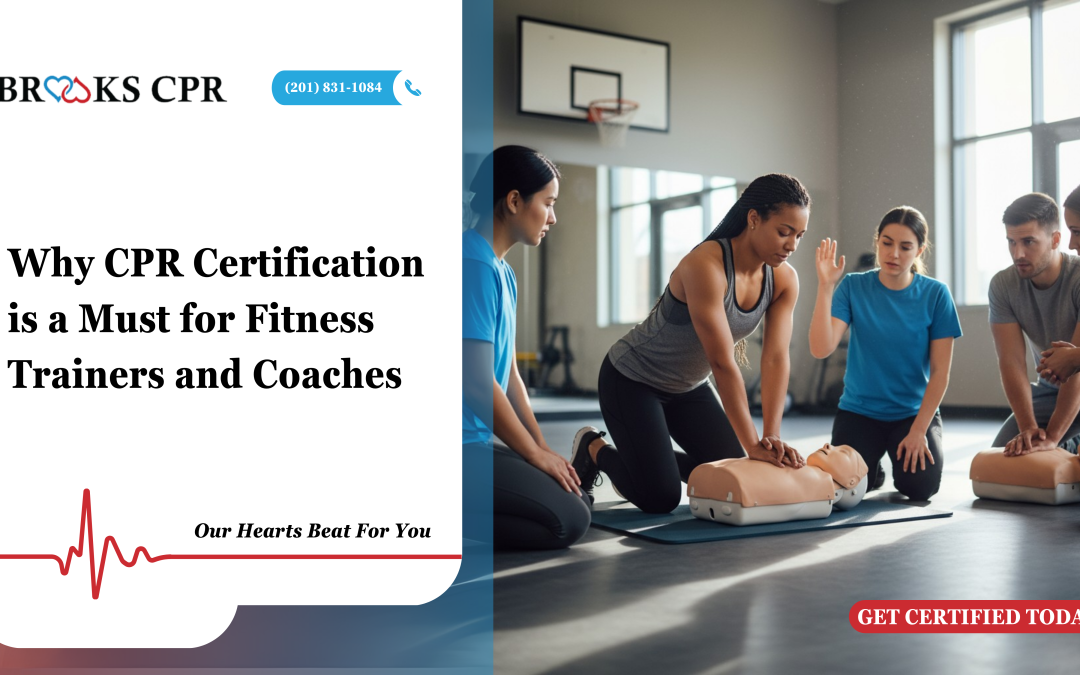
You became a fitness trainer because you care about helping people become healthier and stronger.
But here’s a question worth considering: if one of your clients suddenly collapsed during a session, would you know exactly what to do in those critical first minutes?
It’s not a comfortable thought, I know.
But having CPR Certification means you’re equipped to handle the unexpected—and in an emergency, those skills could mean the difference between life and death for someone counting on you.
1. The Physical Demands and Health Risks of Training Clients
Think about what actually happens during a typical training session.
Heart rates spike. Blood pressure rises.
Your clients are breathing hard, sweating, and pushing past their comfort zones—that’s the whole point, right?
But this physical intensity also means you’re working with people whose cardiovascular systems are under stress, sometimes significant stress.
You might be training someone who doesn’t know they have an underlying heart condition.
Maybe they’re a middle-aged client getting back into exercise after years of being sedentary.
Or perhaps they’re a competitive athlete pushing for a new personal record.
Even young, seemingly healthy people can experience sudden cardiac events during intense physical activity.
The risk factors you encounter daily include:
- Clients with undiagnosed heart conditions who feel fine until they don’t
- Medication interactions that affect heart rhythm or blood pressure
- Dehydration combined with extreme exertion, which can trigger cardiovascular complications
- Post-illness returns to exercise, when the body may not be as ready as your client thinks
- High-intensity training demands that place significant strain on the cardiovascular system
You’re not expected to diagnose these issues, but you are often the only trained professional in the room when someone’s body says “enough.”
2. Real-Life Fitness Emergencies and How CPR Saves Lives
Cardiac emergencies in gyms aren’t just theoretical—they happen more often than most people realize.
A client collapses during a spin class.
Someone clutches their chest after a heavy deadlift.
A runner on the treadmill suddenly falls unconscious.
Brain damage can begin within just four to six minutes without oxygen.
By the time paramedics arrive—even with a fast response time—it may already be too late.
When a trainer knows CPR, they can immediately begin chest compressions and rescue breathing, keeping oxygenated blood flowing to the brain and vital organs.
We’ve seen firsthand how a trainer’s quick, certified response has made a life-changing difference.
Here’s what effective CPR does in a fitness emergency:
- Maintains blood flow to the brain, preventing irreversible damage during those critical minutes
- Buys time for advanced care, giving medical professionals a patient who still has a fighting chance
- Coordinates with AED use, since defibrillators are only effective when combined with proper CPR
- Keeps you focused and purposeful, channeling adrenaline into life-saving action instead of panic
Your certification isn’t just about knowing chest compression techniques—it’s about being able to orchestrate an entire emergency response while staying calm under pressure.
3. The Confidence and Professionalism CPR Certification Provides Trainers
There’s something that happens when you complete CPR training—a shift in how you see yourself as a fitness professional.
You become someone who’s genuinely prepared to protect the people in your care.
This confidence shows up in tangible ways:
- You’re more observant during sessions, picking up on subtle signs of distress you might have previously overlooked
- You stay calmer under pressure, because you’ve mentally rehearsed emergency scenarios
- Your clients feel safer with you, sensing your readiness even if they can’t articulate why
- You meet industry expectations, as many gyms now require CPR certification for employment
But perhaps most importantly, certification prepares you mentally for the reality that emergencies can happen.
You’ve practiced on mannequins. You’ve felt the physical rhythm of effective chest compressions.
If you ever need to use these skills for real, your hands will remember what to do even when your mind is racing.
That muscle memory can mean the difference between panic and effective action.
4. Attracting Health-Conscious Clients
The clients who are most committed to their health are also the ones who think carefully about safety.
They’re not just looking for someone who can design a good program—they want a trainer who understands the bigger picture of wellness and protection.
When potential clients see CPR certification listed in your credentials, it sends a clear message: you’re thinking about their safety from every angle.
This matters especially to certain groups who tend to be more safety-conscious:
- Older adults returning to fitness, who may have concerns about their heart health during exercise
- People with known health conditions, who need a trainer they can trust to respond if something goes wrong
- Parents looking for trainers for their teens, who want that extra assurance their child is in responsible hands
- Corporate clients seeking on-site training, where liability and safety protocols are top priorities
These aren’t just cautious people—they’re often your most dedicated, long-term clients. They do their research.
They ask questions.
And when they see you’ve taken the time to get certified in life-saving skills, it tells them you’re the kind of professional who thinks ahead.
5. Standing Out in Gym or Club Hiring Processes
If you’re looking to work at an established gym or fitness club, CPR certification has shifted from “nice to have” to “must have” in most hiring decisions.
Many facilities won’t even consider applications without it, and for good reason—their insurance often requires it.
But beyond meeting minimum requirements, certification can genuinely set you apart in competitive hiring situations:
- You’re immediately employable without the gym needing to wait for you to complete training
- You reduce liability concerns for the facility, making you a safer hire from a risk management perspective
- You demonstrate initiative, showing you’ve thought about the full scope of the role before applying
- You can start working with clients right away, without scheduling delays for mandatory safety training
Some gyms receive dozens of applications for a single trainer position.
When a hiring manager is comparing similar candidates with comparable experience and certifications, your CPR credential can be the detail that moves your resume to the top of the pile.
It shows you’re not just qualified to train—you’re qualified to keep people safe while doing it.
6. Building Trust and Client Retention
Here’s something interesting about CPR certification: most of your clients will never need you to use it.
But knowing you have it changes the entire dynamic of your relationship with them.
Trust is what keeps clients coming back month after month, and safety is a huge component of trust.
When clients know you’re prepared for emergencies, they relax into the training process.
They’re more willing to push themselves because they feel secure.
That psychological safety translates into better workouts, faster progress, and longer client relationships.
The trust factor shows up in subtle but meaningful ways:
- Clients are more likely to refer friends and family to a trainer they trust completely, not just with programming but with safety
- They’re comfortable pushing harder during challenging workouts, knowing you’re watching out for more than just their form
- They stay with you longer, because switching to an unknown trainer means rebuilding that sense of security
- They’re more forgiving when other things aren’t perfect, because the foundation of trust is already solid
We’ve watched trainers build thriving practices largely through word-of-mouth referrals, and there’s often a common thread: their clients talk about feeling safe, not just motivated.
That’s the kind of reputation you can’t buy with marketing—it comes from genuinely being prepared to care for the people who trust you with their health.
Your Certification, Your Clients’ Safety
As a fitness trainer, your expertise goes beyond reps and routines—it extends to creating a safe environment where clients can push their limits with confidence.
CPR certification isn’t just another credential; it’s a fundamental investment in your clients’ wellbeing and your professional credibility.
Ready to get certified?
Brooks CPR makes it easy with convenient locations across New York and New Jersey, plus online options.
Invest in the skills that matter most—because prepared trainers build trust, and trust builds lasting success.