
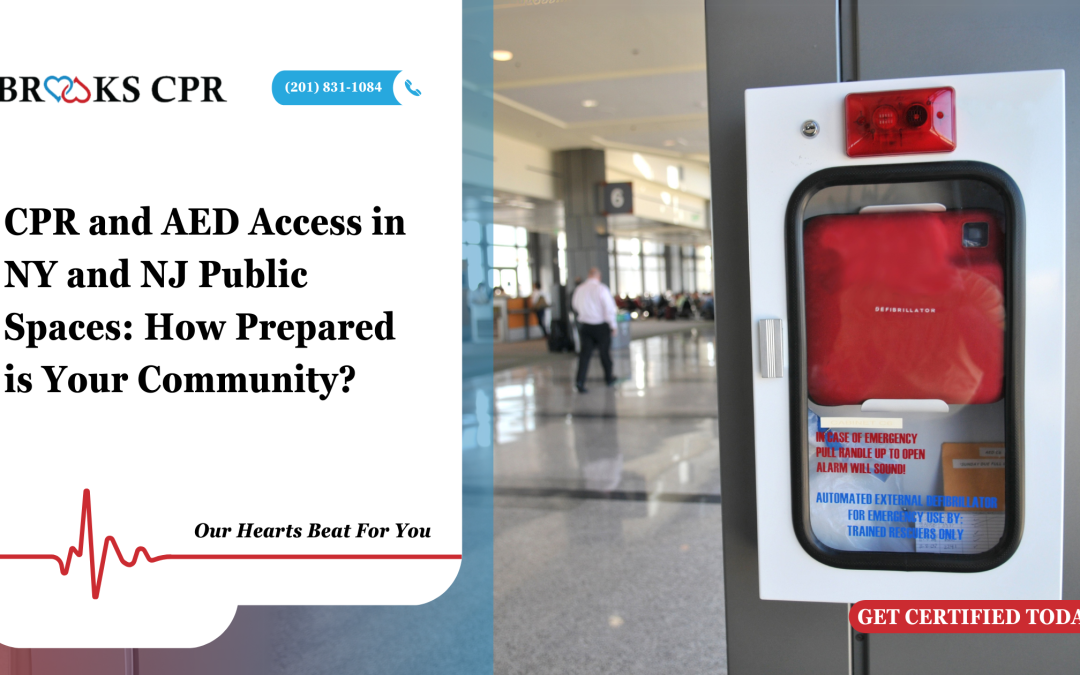
Cardiopulmonary resuscitation (CPR) and automated external defibrillator (AED) are life-saving techniques that can be performed on someone experiencing cardiac arrest.
The prompt action of CPR and AED can significantly increase the chances of survival for a victim.
In recent years, there has been an increasing focus on promoting access to CPR and AED in public spaces, as quick access to these devices has shown to have a significant impact on saving lives.
This article will explore the current state of CPR and AED accessibility in New York (NY) and New Jersey (NJ), and how prepared these communities are in handling cardiac emergencies.
The Current Landscape of CPR and AED Resources in NY and NJ
Being prepared for cardiac emergencies starts with understanding the accessibility of CPR and AED resources in the spaces we frequent.
Here’s a closer look at where these life-saving tools are available and the legal framework supporting their use in New York and New Jersey.
Availability in Public Spaces
Throughout New York and New Jersey, AEDs are becoming more common in high-traffic and public areas, which is crucial for increasing survival rates in cardiac emergencies. Some key locations include:
- Malls and retail centers – Many large shopping centers now install AEDs in common areas, ensuring quicker access for shoppers and staff.
- Airports and transportation hubs – Places like airports and train stations are mandated to maintain AEDs, given the high volume of travelers passing through.
- Parks and recreational spaces – Community parks, especially those with athletic facilities, are increasingly prioritizing AED installations.
- Schools – By law, schools in both NY and NJ are required to have AEDs on-site. This regulation ensures the safety of students, staff, and visitors during school hours and extracurricular activities.
- Sports venues – With thousands of spectators gathered at sporting events, AEDs are essential for addressing sudden cardiac emergencies in a crowded environment.
Both states understand the importance of quick access, and it’s encouraging to see AEDs integrated into more public spaces.
However, more work is needed to ensure every community has equitable access to these resources.
Legal Framework
The laws in New York and New Jersey play a critical role in shaping AED availability and use.
Some of the most significant legal aspects include:
- AED installation requirements – Both states have mandates for AEDs in several public places, including health clubs, educational institutions, and certain recreational facilities. These regulations aim to create safer environments by making immediately accessible AEDs the norm rather than the exception.
- Good Samaritan laws – A common concern for bystanders is whether they could face legal repercussions for attempting to help in an emergency. Luckily, New York and New Jersey have robust Good Samaritan laws to protect individuals who perform CPR or use an AED in good faith. This legal coverage encourages more people to act confidently when someone’s life is at risk.
These legal measures reflect a commitment to fostering communities that are better prepared to handle cardiac emergencies.
Community Initiatives to Expand Access
Accessible AEDs and widespread CPR training are key to saving lives during cardiac emergencies, and many efforts have been taken to ensure these resources are available to as many people as possible.
Communities in both New York and New Jersey have demonstrated significant progress in this area through various programs and partnerships.
Below, we explore how local governments and non-profit organizations are making a difference.
Local Government Efforts
Local governments play a crucial role in increasing AED availability and fostering CPR training initiatives in neighborhoods.
Their efforts include:
- Installing AEDs in Public Spaces – Efforts have been made to outfit parks, libraries, and other heavily trafficked areas with AED devices. These installations serve to bridge the time gap between the occurrence of a cardiac arrest and the arrival of emergency services, which often proves lifesaving.
- Partnerships Promoting CPR Training – Collaboration between local governments and healthcare organizations aims to bring CPR training to communities. They often hold free or low-cost classes to equip residents with the skills and confidence needed to step in during emergencies.
These initiatives underline the importance of working together to create safer, more prepared communities.
Non-Profit Organizations
Non-profits are often at the forefront of empowering individuals through education and resource distribution.
Their contributions make a lasting impact by focusing on community engagement and grassroots efforts.
Here’s how they’re stepping up:
- Community Training Programs – Many non-profits hold CPR and AED training sessions that are accessible to the general public. These programs not only provide life-saving skills but also encourage a culture where helping others is the norm.
- Resource Distribution – Organizations often facilitate grants or donations to supply smaller communities or underserved areas with AEDs. By doing so, they fill crucial gaps left by tighter local budgets.
- Successful Community-Driven AED Programs – Stories of everyday citizens stepping up because of training provided by non-profits underscore the value of these initiatives. For example, school programs focused on CPR training have empowered thousands of students to potentially save lives, all because of non-profit involvement.
Together, these government and non-profit efforts further solidify the foundation of readiness and resilience in our communities.
Brooks CPR remains inspired by these initiatives and is proud to contribute to the mission of equipping individuals with CPR skills and encouraging wider AED accessibility.
Training and Awareness Programs
Making sure that more people are prepared to handle emergencies is at the heart of community safety efforts.
Training in CPR and AED use does more than teach essential skills — it gives individuals the confidence to act when seconds count.
Empowering individuals with the knowledge to potentially save a life creates a ripple effect, strengthening the safety net in our neighborhoods.
Importance of Training
When a sudden cardiac arrest occurs, every moment is crucial.
Bystanders who are trained in CPR and AED usage can significantly increase survival rates by taking immediate action.
Understanding the techniques of chest compressions, knowing how to position an AED, and learning when to act can transform what may feel like a hopeless situation into one with a fighting chance for life.
The impact of training goes beyond the technical aspects. It builds a sense of responsibility and readiness among community members.
There’s a shift from hesitation to confidence, from passivity to action.
With proper training, individuals move past the fear of doing something wrong and focus on the opportunity to help.
Community Workshops
One of the most effective ways to reach people is through hands-on learning.
At Brooks CPR, we’ve seen how community workshops can make a real difference in how confident individuals feel about responding to emergencies.
These sessions are open to people of all backgrounds and experience levels, offering approachable and practical learning opportunities.
- Hands-On Training – Workshops often include interactive practice on CPR manikins and AED devices. This tangible experience helps participants retain the skills they’ve learned.
- School Collaborations – Partnering with schools to integrate CPR training into curricula empowers students to step up as first responders. A taught skill in youth can create a lifelong readiness to help.
- Specialized Sessions – Beyond basic training, some workshops focus on specific community needs, such as training for athletic coaches, workplace teams, or childcare providers.
Building these opportunities fosters a culture of preparedness.
People leave workshops not only with the skills to respond, but with the knowledge that they are capable of making a difference.
It’s a simple step, but one with lasting impact.
A Shared Mission
Ultimately, training and awareness programs don’t just prepare individuals — they unite entire communities under a shared commitment to saving lives.
Learning CPR and AED usage is about more than education; it’s about creating a stronger, more connected community.
Brooks CPR is honored to stand alongside these efforts as part of the greater mission to equip, educate, and empower.
Together, we can build a safer, more resilient future.
Join us in our commitment to making a difference, one life at a time!